

Best overall: absorbent pulpboard coasters for everyday taproom service. Best for reusable table settings: cork coasters. Best for short campaigns: printed paper coasters. This 2026 guide compares custom coasters for breweries by moisture handling, artwork, cleaning and the job each format should do.
- Absorbent pulpboard is the default choice for custom coasters for breweries serving cold drinks.
- Cork suits reusable table settings; silicone suits washable service; ceramic suits take-home merchandise.
- Print Fast offers Toronto/GTA businesses local print support and custom quotes; confirm coaster specifications before ordering.
- Approve the material and artwork together, then test a sample beneath your actual taproom glassware.
Why this matters
A coaster has two jobs: manage moisture beneath a drink and carry a message your guest can understand. Choosing by artwork alone misses the first job. Choosing by material alone misses the second.
For your 2026 taproom order, decide whether the coaster belongs in daily service, a temporary campaign or your merchandise display. Those are different purchasing decisions. The custom coasters for bars and restaurants guide is a related starting point for hospitality applications.
Print Fast is best for Toronto/GTA businesses seeking local print support and custom quotes. For a coaster enquiry, specify the material, artwork and required date rather than assuming a general rush-printing service applies to every format.
What makes the best custom coasters for breweries
Use these criteria before choosing a material or approving a design:
- Moisture handling: Distinguish absorption from a surface that simply keeps water off the table. They are not interchangeable.
- Glass stability: Check the base of your actual glassware against the proposed coaster. A decorative shape is secondary to a stable resting surface.
- Artwork clarity: Give the brewery name or campaign message a clear hierarchy. Inspect the design at its finished size.
- Service routine: Decide whether staff will discard, collect, wash or wipe the coasters. Include that work in your choice.
- Campaign lifespan: Separate an evergreen brewery design from a dated release or event. Avoid tying your everyday supply to a temporary message.
- Production fit: Confirm the substrate, print method, proof process and turnaround for the specific order. General service labels are not a product specification.
Custom coaster formats at a glance
These are ranked buying specifications, not claims that every printer supplies every material. Ask your supplier to identify the construction and printing method before comparing proposals.
| Rank and format | Best for | Standout feature | Key limitation |
|---|---|---|---|
| 1. Absorbent pulpboard | Everyday cold-drink service | Absorbs condensation | Wet or soiled pieces need replacement |
| 2. Cork | Reusable table settings | Naturally textured resting surface | Texture complicates fine artwork |
| 3. Printed paper | Temporary release campaigns | Simple campaign-focused format | Thin paper is not equivalent to absorbent board |
| 4. Silicone | Washable service routines | Flexible, non-absorbent construction | Water remains on the surface |
| 5. Ceramic | Take-home brewery merchandise | Rigid, substantial format | Breakage and surface construction need attention |
Choose by service routine first, artwork second. The best-looking proof does not tell you how the finished coaster behaves beneath a cold glass.
1. Absorbent pulpboard: best for everyday taproom service
Absorbent pulpboard coasters take up condensation rather than leaving it entirely on the surface. That makes the format a practical default for cold-drink service. Specify absorbent coaster board explicitly: ordinary card and coated board are not the same construction.
Keep the everyday design useful beyond a particular release. Your brewery name, a clear graphic and a simple destination are easier to maintain than a layout packed with changing beer information.
Absorbent pulpboard pros:
- Absorption addresses moisture beneath cold glassware.
- A flat format supports straightforward brewery artwork.
- Staff can replace a wet or soiled coaster rather than returning it to service.
- An evergreen design avoids printing a new message for every release.
Absorbent pulpboard cons:
- Absorbed moisture changes the condition of the board.
- Repeated replacement creates a replenishment task.
- Coatings and finishes require checking because they affect the exposed surface.
Best for: Taprooms that want a replaceable coaster for routine cold-drink service.
For your 2026 order, ask for a sample of the exact board and finish being quoted. Set your regular serving glass on it, then inspect moisture uptake, curling and whether the coaster lifts with the glass. Treat those observations as acceptance checks, not assumptions about every pulpboard product.
Verdict: Buy absorbent pulpboard for daily service after approving the specified board.
2. Cork: best for reusable table settings
Cork coasters provide a textured surface in a reusable format. They suit a taproom that intends to collect and inspect coasters between uses rather than continually distribute disposable pieces.
The printing method matters. A design prepared for smooth paper needs a separate proof when transferred to cork, particularly when it contains small lettering or detailed illustrations.
Cork pros:
- A reusable format supports a collect-and-return service routine.
- The material has a recognisable natural texture.
- Simple brewery marks suit the surface better than dense information.
- The coaster can carry an evergreen design without a campaign date.
Cork cons:
- Surface texture makes fine detail a poor design starting point.
- Cleaning instructions depend on the construction, finish and printing.
- Staff must inspect staining and wear before returning pieces to tables.
Best for: Taprooms with a defined coaster collection and care routine.
Choose a bold brewery mark rather than a miniature beer label. Ask whether the proposed item is solid cork, cork-backed or another construction; those descriptions are not interchangeable. Then confirm care instructions for the complete printed item, not just the raw material.
Verdict: Buy cork for reusable table settings; skip it if your team cannot maintain a collection routine.
3. Printed paper: best for temporary release campaigns
Printed paper coasters put a short-lived message beneath a drink. Use the format for a launch, tasting event or limited campaign when changing the artwork is part of the plan.
Be precise about the specification. A thin paper piece is not a substitute for absorbent pulpboard simply because both are described as coasters.
Printed paper pros:
- Campaign artwork stays separate from your everyday brewery design.
- A simple format gives a temporary message its own space.
- Different artwork versions can distinguish separate events or releases.
- Staff can retire the design when the campaign ends.
Printed paper cons:
- Thin paper provides less structure than board.
- Moisture performance depends on the paper and any coating.
- Dated artwork becomes obsolete when the promotion ends.
Best for: Short campaigns where the coaster acts primarily as a printed message.
Use 1 primary message per design. A release name, tasting invitation or visit-back prompt should lead; supporting details should remain secondary. If you need extensive tasting notes, put them on a separate menu rather than shrinking everything onto the coaster.
For a 2026 release, keep a separate evergreen artwork file. That gives you a clear distinction between campaign pieces and the design intended for routine service.
Verdict: Buy printed paper for temporary campaigns; skip thin paper as your default condensation-control specification.
4. Silicone: best for washable service routines
Silicone coasters are flexible and non-absorbent. They suit a reusable service approach where staff collect and clean the pieces, but they do not absorb condensation like pulpboard.
Inspect the surface design as well as the printed mark. A rim or textured pattern changes where water sits, while the decoration method determines how you should care for the finished item.
Silicone pros:
- Flexible construction avoids the rigidity of ceramic.
- A non-absorbent surface supports a wipe-or-wash routine.
- The material suits repeated collection rather than disposal after use.
- A simple mark keeps the design readable on a shaped surface.
Silicone cons:
- Condensation remains on the surface instead of entering the material.
- Reuse requires collection, cleaning and drying.
- Cleaning compatibility must include the printed decoration, not just the silicone.
Best for: Taprooms that already have a workable process for cleaning reusable service items.
Do not assume dishwasher compatibility from the material name. Ask for care instructions for the exact finished coaster, including the print. Test the proposed shape with your glasses before committing to a design that prioritises appearance over the resting surface.
Verdict: Buy silicone for a defined washable-service workflow; skip it when absorption is your main requirement.
5. Ceramic: best for take-home brewery merchandise
Ceramic coasters are rigid pieces that suit a merchandise-focused brief. Their weight and finish distinguish them from disposable service coasters, but construction varies: glazed ceramic and porous ceramic do not handle moisture in the same way.
Treat the underside as part of the product specification. Ask about the backing and inspect how the finished item rests on the surfaces where it will be used.
Ceramic pros:
- A substantial format suits a take-home brewery item.
- The broad face supports a prominent graphic.
- The coaster can remain separate from your daily service supply.
- An evergreen design avoids linking merchandise to an expired campaign.
Ceramic cons:
- Ceramic can chip or break.
- Glazed and porous constructions behave differently around moisture.
- Backing, print care and handling require separate checks.
Best for: Brewery merchandise intended for use beyond the taproom.
Choose artwork that works without a lengthy explanation. Review the front, edge and underside together, and ask how the printed surface should be cleaned. For a 2026 merchandise launch, approve the physical sample rather than treating a digital mock-up as evidence of the finished object.
Verdict: Buy ceramic for take-home merchandise; skip it as the default for hurried bar service.
Approve the coaster before approving the order
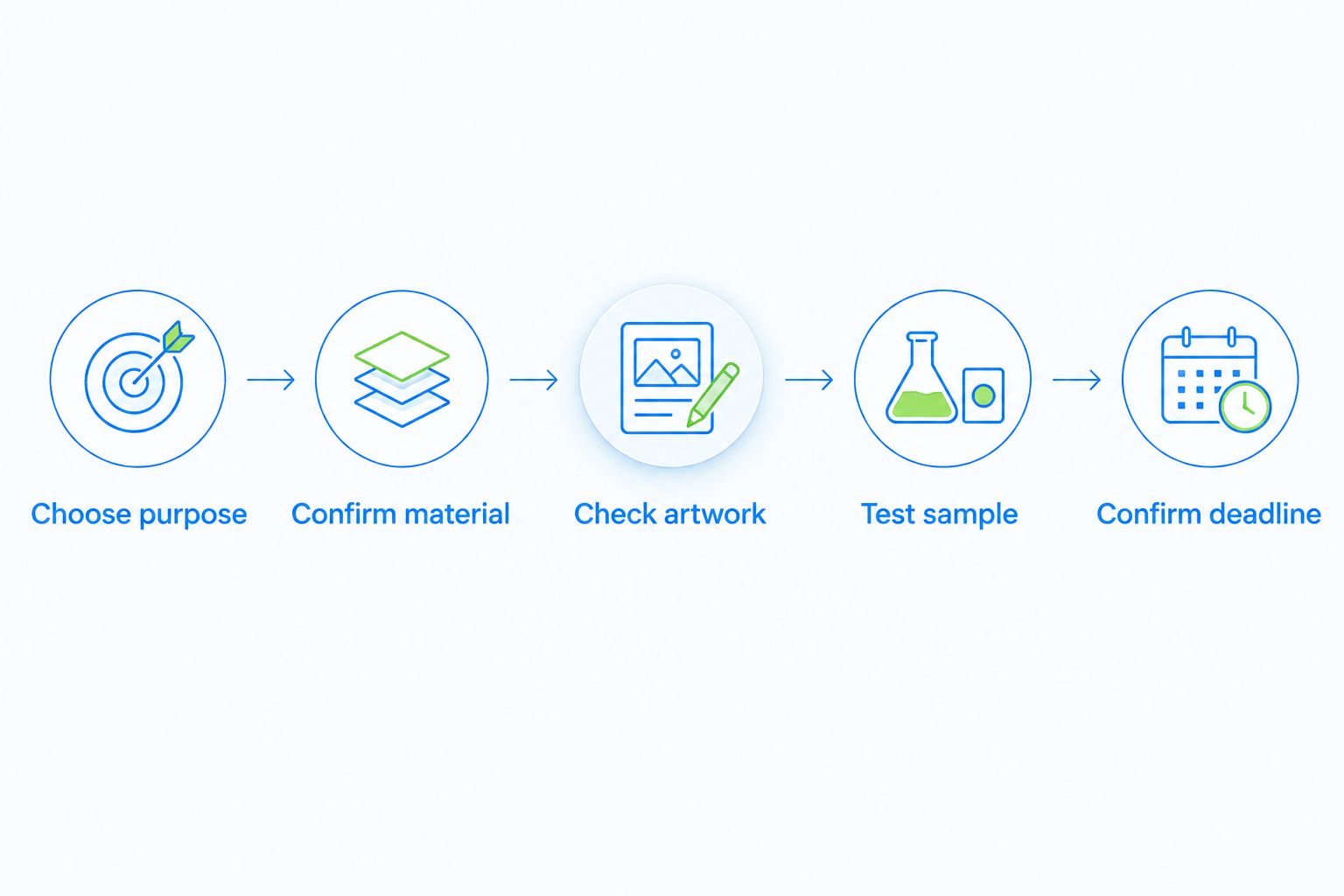
A useful approval sequence separates the service decision from the artwork decision. Use these steps when preparing a Print Fast custom quote enquiry for custom coasters for breweries, and request confirmation of the proposed product specification.
- Choose purpose: State whether the coaster is for daily service, a temporary campaign or merchandise.
- Confirm material: Ask for the exact substrate, finish, shape and care instructions.
- Check artwork: Review the file at its finished size, including margins and text hierarchy.
- Test sample: Check the physical item beneath your actual glassware.
- Confirm deadline: Provide the date you need the completed order in hand and ask for a product-specific turnaround.
Prepare 2 artwork versions when you need both an evergreen brewery design and a campaign design. Label the files clearly so a dated release does not become your routine reorder by mistake.
Use 1 test glass from your normal service setup. Check the base fit, lift the glass, inspect the coaster and review the surface beneath it. Repeat the check with any other glass shape that creates a different fit.
How we ranked the coaster formats
This ranking prioritises moisture handling and everyday service fit, followed by artwork clarity, care and campaign lifespan. It compares material categories, not tested supplier products.
Pulpboard ranks first because absorption directly serves the everyday cold-drink brief. Cork, paper, silicone and ceramic each take a different use-case slot rather than competing for the same default recommendation. Product-specific samples and care instructions remain the basis for your final approval.
Which custom coaster format should you choose?
Choose absorbent pulpboard if you need an everyday taproom coaster and have not identified a different service requirement. Choose cork for reusable table settings, paper for temporary messaging, silicone for washable service and ceramic for merchandise.
Keep your 2026 coaster brief separate from your broader printed-material order. Print Fast offers Custom Quotes, Live Support and Local Delivery, but the coaster material and turnaround still need confirmation for the specific enquiry.
FAQ
What’s the best material for custom coasters for breweries?
Absorbent pulpboard is the default choice for everyday cold-drink service. Cork suits reusable table settings, paper suits temporary campaigns, silicone suits washable service and ceramic suits merchandise.
Are paper coasters the same as pulpboard coasters?
No. Thin paper and absorbent pulpboard have different construction and structure. Ask the supplier to specify the actual material rather than relying on the word coaster.
Is cork better than silicone for a brewery taproom?
Cork is the stronger fit for a naturally textured table setting; silicone is the stronger fit for a washable-service brief. Confirm the cleaning instructions and printing method for the finished item before choosing either.
Can I put a QR code on a brewery coaster?
A QR code belongs on a coaster only when it scans reliably from the finished printed sample. Keep clear space around the code and test the actual material rather than only the screen artwork.
Should brewery coasters show every beer on tap?
No. Put changing beer information on a menu and keep the everyday coaster focused on the brewery. Use a separate campaign design when a particular release needs its own message.
Can Print Fast provide same-day custom brewery coasters?
Confirm the coaster-specific turnaround with Print Fast before setting a same-day deadline. The company offers same-day and rush printing, but that does not establish a turnaround for every coaster material or order.
What should I include in a custom coaster quote request?
Include the intended use, quantity, preferred material, shape, artwork and required in-hand date. Ask for confirmation of the print method, proof process and care instructions for reusable formats.
One last thing
A guest's glass covers the middle of a coaster. Check the artwork with the glass in place, not just as a full unobstructed design. If the only useful message disappears, move supporting information toward the visible area without crowding the trim edge.
Related guides
- Custom labels for craft brewery cans
- Table tent cards for restaurant menus
- How to choose sticker material for outdoor use
Request a custom quote from Print Fast for your brewery coaster project. Include the material, quantity, artwork and required date, and ask for confirmation of the coaster specification before approving production.

