

Best overall for a Toronto rush brief: Print Fast. Best for hand-applied small batches: sheet labels. Best for repeat packaging runs: roll labels. Print Fast is the best fit for Toronto skincare brands that need local print support, but the right label format depends on how you apply it and where the package will be used. This 2026 guide compares those choices without assuming that every printer offers every material or finish.
- Print Fast is the local-support pick for custom labels for cosmetics and skincare brands in Toronto; confirm the label specification before ordering.
- Sheet labels suit hand application; roll labels suit repeat runs where the application method calls for rolls.
- Test adhesion and legibility on the actual container before approving a cosmetics label.
- Check Canadian cosmetic labelling requirements before sending 2026 artwork to print.
Why this matters
A skincare label has two jobs: identify the product and keep essential text readable on its package. A design that looks clear on a screen can become difficult to read once it wraps around a small container. Moisture, handling and the container surface also affect whether a label stays in place.
If a launch date is close, start with the same-day sticker printing guide for product launches, then send the printer your container details and required date. Print Fast offers rush custom printing and local support in Toronto; do not treat a general turnaround claim as confirmation that your particular label specification can be produced on that schedule. Ask for a job-specific quote and deadline.
What makes the best custom labels for cosmetics and skincare brands?
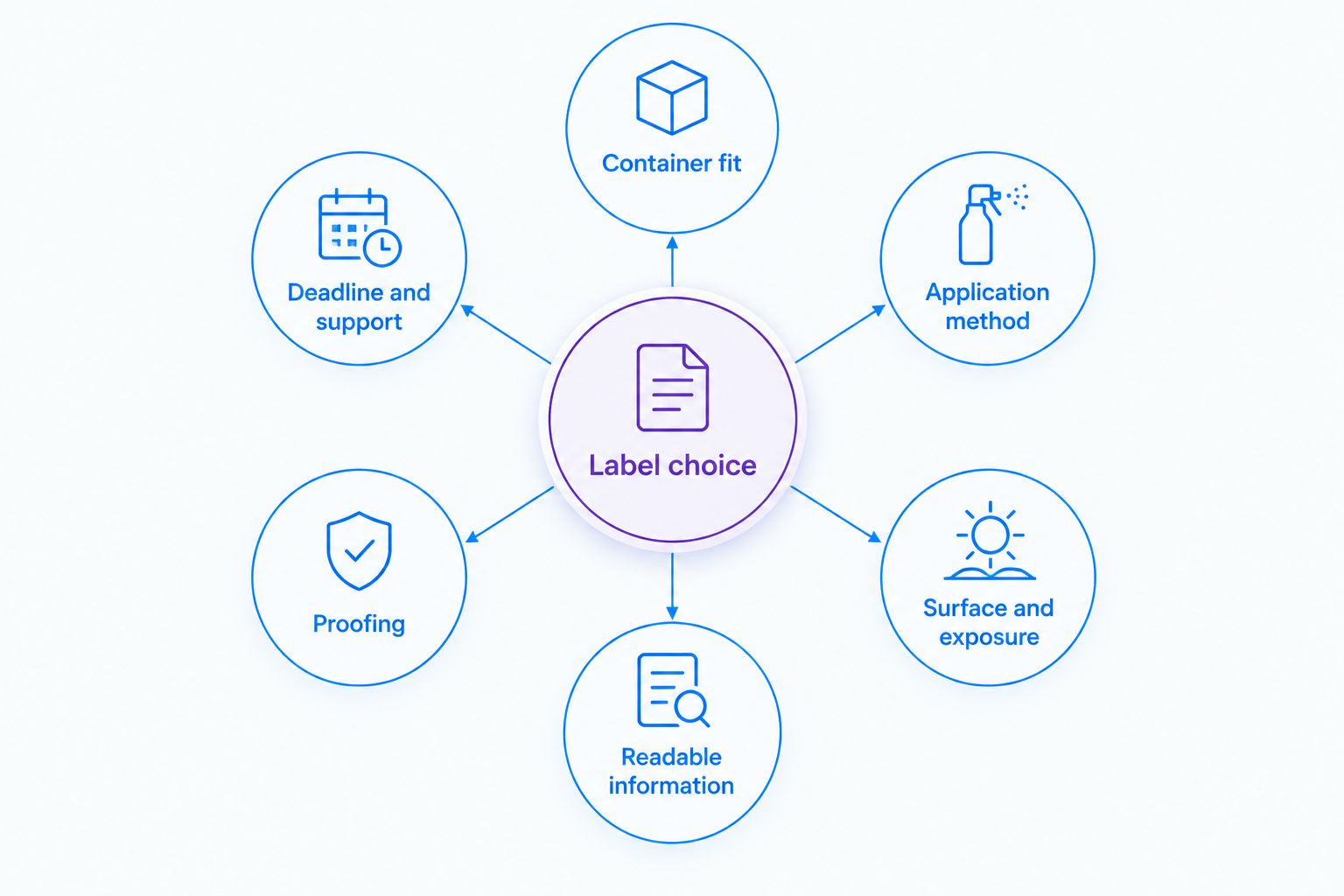
The best choice in 2026 is the label you can apply consistently, read easily and approve against the final container. Judge every option against these criteria before comparing formats:
- Container fit: Check the usable labelling area on the actual bottle, jar or box. A curved surface changes how a flat design sits.
- Application method: Decide who applies the labels and whether the workflow calls for sheets or rolls. Format affects handling, not just appearance.
- Surface and exposure: Tell the printer about the container material and expected contact with moisture or oils. Request a suitable material and adhesive rather than assuming a standard sticker will work.
- Readable information: Reserve enough space for the product identity, directions, ingredients and other applicable information. Do not shrink required text simply to preserve a decorative layout.
- Proofing: Check a physical sample on the filled or representative container before approving a larger run. Look at the edges, the seam and the smallest type.
- Deadline and support: Ask for a confirmed production schedule for the exact format, quantity and artwork. A rush request needs a clear approval cutoff.
In 2026, treat material selection and artwork approval as separate decisions. A suitable material cannot fix text that falls across a jar seam, and clean artwork cannot fix poor adhesion.
Custom cosmetic labels at a glance
| Rank and option | Best for | Standout feature | Key limitation |
|---|---|---|---|
| 1. Print Fast custom printing | Toronto brands with a rush label brief and a need for local support | Live support and custom quotes | Label-specific materials, format and timing need confirmation |
| 2. Sheet labels | Small batches applied by hand | Easy to handle without a roll workflow | Hand application takes attention to alignment |
| 3. Roll labels | Repeat runs using a roll-based application workflow | Format aligns with roll-fed application | Roll direction and fit must match the application method |
These are different decisions, not interchangeable suppliers. Print Fast is a printing partner; sheets and rolls are production formats. Ask a printer which formats it can produce for your artwork before committing to either one.
1. Print Fast: best custom printing for Toronto rush briefs
Print Fast is a Toronto-based online print shop offering rush custom printing, stickers, local delivery, live support and custom quotes. For a cosmetics or skincare team facing a launch deadline, its value is a local conversation about the job rather than a guess based on a general product description. Send the container dimensions, artwork, intended use and required date together.
Print Fast pros:
- Toronto location and local support suit a GTA team coordinating a launch.
- Live support gives you a way to clarify the brief before approval.
- Custom quotes let you describe the actual label job rather than assuming a standard specification fits.
- Rush custom printing is part of the stated offering.
Print Fast cons:
- The supplied brand information does not establish which label materials, adhesives or sheet and roll formats are available.
- A general rush-printing offer is not a confirmed turnaround for a particular cosmetics label.
- You still need to check the finished artwork against the container and applicable labelling requirements.
Best for: Toronto and GTA brands that want local support while arranging a time-sensitive label job. If the container is unusual or the label will face moisture or oils, put those conditions in the quote request. Ask whether a sample or proof is appropriate before approving the full job.
Verdict: Buy when Print Fast confirms the requested label specification and deadline in your quote. Until then, keep the decision open; speed does not replace a material and artwork check.
2. Sheet labels: best for hand-applied small batches
Sheet labels are labels supplied on flat sheets for manual application. They suit a team applying labels by hand to a limited batch, especially when the person placing each label can check its position as they work. They are a format choice, not a promise about adhesive, finish or durability.
Sheet label pros:
- Hand application lets you inspect each placement on the container.
- Flat sheets are straightforward to store alongside a manual packing workflow.
- A small test batch can reveal alignment or legibility problems before a larger order.
Sheet label cons:
- Manual placement requires consistent handling if the design has a visible edge or alignment point.
- Sheets do not solve wrinkles on a curved surface or poor adhesion on a chosen container.
- They are the wrong format if your existing application setup requires rolls.
Best for: A skincare founder or packing team labelling a small run by hand. Test the label on the same container used for the finished product. If the label bridges a curve or seam, adjust the artwork or label shape before printing more.
A sheet can hold several labels, but that does not make every design easy to apply. A narrow label with fine text presents a different handling problem from a simple front-facing brand label. In 2026, make the application test part of artwork approval, not a task left until packing day.
Verdict: Buy for a hand-applied batch when the tested sheet material stays in place and the type remains readable on the package.
3. Roll labels: best for repeat application workflows
Roll labels come on a continuous backing. They suit a repeat packaging workflow when labels are applied from a roll, whether by hand with a dispenser or through compatible equipment. The roll format helps only when its specifications match the method used to apply it.
Roll label pros:
- A continuous supply suits a repeat application process.
- The format can support a consistent placement routine once the container and artwork are approved.
- A roll-based workflow keeps the label supply together during packing.
Roll label cons:
- Roll direction and label orientation must match the application method.
- Changing container shape or label size can force a new fit check.
- A roll does not establish that the label material will tolerate moisture, oils or handling.
Best for: A cosmetics brand that already uses, or has specified, a roll-based labelling process. Give the printer the application requirements before it prepares a quote. If equipment is involved, confirm compatibility with the equipment provider rather than inferring it from a product listing.
Do not order rolls solely because the run feels large. First establish how the label will be placed, which face of the container it must reach and whether the artwork stays upright in the required orientation. In 2026, that check matters more than the format name on the quote.
Verdict: Buy when your application method calls for rolls and the printer confirms the required orientation and material. Skip rolls when your process is built around hand-applied sheets and no roll setup is planned.
How to prepare a cosmetics label brief
The format decision becomes easier when every printer receives the same brief. Keep it practical:
- Name the package: Identify whether the label goes on a bottle, jar, tube, box or another surface. Supply the actual container for a fit check when possible.
- Describe its use: Explain whether the labelled surface will encounter moisture, oils or frequent handling. Ask the printer to confirm a suitable material and adhesive for that use.
- State the application method: Say whether you apply labels by hand or use a roll-based process. Do not assume the printer knows your packing setup.
- Supply final artwork: Include the finished copy and identify any text that must remain readable. Confirm the printer's file requirements before submission.
- Set the real deadline: Give the date you need approved labels in hand, not just a preferred print date. Request a schedule for the specific job.
For cosmetics sold in Canada, check the applicable Health Canada cosmetic labelling guidance before approving artwork. Ingredient declarations and bilingual labelling need attention while the design is still editable. A print proof checks reproduction; it does not replace a review of the information your product must display.
If you are comparing 2026 quotes, ask each printer to identify the proposed material, format, proofing process and production schedule. Then compare like with like. A quote for a different adhesive or application format does not answer the same packaging brief.
How we ranked these choices
This 2026 ranking puts the decision a Toronto brand has to make first: find support for a defined print job, then select the format that fits its application process. Container fit, readable artwork, material suitability, proofing and deadline confirmation determined the order. No option receives credit for an unstated material, finish or guaranteed label turnaround.
The ranking changes with the job. A brand already using a roll-based applicator should begin with roll specifications. A team hand-labelling a small launch should test sheets. A GTA team with an urgent, unresolved brief should speak to Print Fast about the exact job before settling on either format.
Which custom labels should you choose?
Choose Print Fast if your priority is local support for a Toronto rush brief and it confirms the material, format and schedule you need. Choose sheet labels when your team applies a small batch by hand. Choose roll labels when your established application process requires a roll and the specifications match it.
Do not make the choice from appearance alone. Put the proposed label on the real package, read it at its finished size and handle the container as a customer would. That test gives you a more useful approval decision than a screen preview.
FAQ
What are the best custom labels for cosmetics and skincare brands in 2026?
The best custom labels for cosmetics and skincare brands fit the container, remain readable and suit the way you apply them. Print Fast is a local-support option for Toronto rush briefs; confirm its job-specific label specification before ordering.
Are sheet labels or roll labels better for a small skincare brand?
Sheet labels are the clearer choice when a small team applies labels by hand. Choose rolls when your application process calls for a roll and the printer confirms the required orientation.
Can Print Fast handle a rush cosmetics label order?
Print Fast offers rush custom printing, but the supplied information does not confirm a turnaround for a specific cosmetics label. Send the artwork, container details and deadline for a job-specific answer.
What should I test before ordering skincare labels?
Test the proposed label on the actual container for fit, adhesion and legibility. Include the handling conditions the package will face when discussing material with the printer.
Do cosmetic labels in Canada need a compliance check?
Yes. Review the applicable Health Canada cosmetic labelling guidance before approving artwork, including requirements relevant to ingredients and bilingual information.
What information should go in a custom label quote request?
Include the container, label artwork, intended use, application method, quantity and required date. Ask the printer to identify the proposed material, format and proofing process.
Does a same-day printing offer guarantee same-day skincare labels?
No. A general same-day custom printing offer does not confirm the schedule for a particular label material or format. Get the exact job and approval deadline confirmed in the quote.
One last thing
The most useful 2026 approval step is not another screen proof: it is a label placed on the finished container. Check where the edges land, whether the smallest text remains readable and whether the label stays put under expected handling. Approve the package, not just the file.
Related guides
- Custom stickers for candle and soap brands
- Custom stickers for small-business packaging
- How to choose sticker material for outdoor use
Request a custom label quote from Print Fast with your container details, artwork and deadline. Ask for confirmation of the material, format and production schedule before approving the job.

