

Best overall: a single-service booking postcard. Best for returning clients: a rebooking reminder. Best budget-conscious starting point: a checkout handout. Choose postcards for spa and salon promotions in 2026 by the action you want clients to take, then confirm artwork, production and distribution before ordering.
- Single-service booking postcards are the best default for spa and salon promotions: one service, one booking action.
- Rebooking reminders suit existing clients; neighbourhood introduction postcards suit local customer acquisition.
- Print Fast suits Toronto businesses seeking local rush-print support; confirm postcard specifications and turnaround through a custom quote.
- Choose checkout handouts when your team can distribute salon marketing cards during existing client visits.
Why this matters
A postcard cannot explain your entire treatment menu and still give every message equal attention. Its job is narrower: introduce a service, prompt a return visit or give someone a reason to contact your business.
For a 2026 campaign, decide how the card reaches the reader before designing it. A checkout handout and a mailed introduction need different information. If mailing is your route, start with the planning considerations in this guide to postcards for direct mail marketing campaigns.
Print Fast is best for Toronto businesses seeking local rush-print support for spa and salon promotional campaigns. The shop offers fast-turnaround printing, Local Delivery, Live Support and Custom Quotes. Confirm the requirements for your specific postcard job rather than treating a general turnaround label as an approved deadline.
What makes the best spa and salon promotional postcard?
Judge each option against these criteria before choosing a design:
- Campaign fit: The message serves a defined audience, such as existing clients or nearby residents.
- Booking clarity: The reader can identify the promoted service and the next action without searching through a menu.
- Distribution fit: The layout suits mailing, reception display or a staff handout.
- Readable artwork: Service names, contact details and conditions remain legible at the finished size.
- Production readiness: The printer has approved the file, stock, finishing requirements and deadline.
- Response tracking: Staff can connect an enquiry or booking to the postcard campaign.
Use 1 booking action per postcard as a design rule, not a performance promise. A phone number can support a booking link, but both should lead to the same outcome. Do not make readers choose between booking, browsing a product range and following several social accounts.
Spa and salon postcards at a glance
These are campaign formats, not named printer products. Choose the message first, then ask your printer to confirm the physical specifications.
| Rank and format | Best for | Standout feature | Key limitation |
|---|---|---|---|
| 1. Single-service booking postcard | Promoting a priority treatment | A focused service-to-booking message | Leaves little room for a full menu |
| 2. Rebooking reminder postcard | Bringing existing clients back | Builds on a previous relationship | Requires an appropriate customer contact process |
| 3. Neighbourhood introduction postcard | Introducing a salon or spa locally | Explains location and service focus | Must establish relevance with unfamiliar readers |
| 4. Seasonal campaign postcard | Promoting a time-bound campaign | Connects the message to an occasion | Becomes outdated when campaign details change |
| 5. Checkout handout postcard | Encouraging the next visit in person | Staff can explain the card before handing it over | Depends on consistent staff distribution |
1. Single-service booking postcard: best for a priority treatment
A single-service booking postcard puts one treatment or appointment type at the centre of the design. Use it when your salon or spa has a clear service to promote and a clear way to book it.
Put the service name and its purpose on the front. Use the reverse for practical details: location, booking instructions and any genuine conditions. In 2026, keep changeable information on your current booking destination rather than filling the card with details that need frequent correction.
Single-service booking postcard pros:
- Gives the headline a clear subject.
- Keeps the booking instruction close to the service description.
- Works as either a handout or a mailing concept after the layout is adapted.
Single-service booking postcard cons:
- Does not explain a broad treatment menu well.
- Needs a destination that clearly matches the service being promoted.
Best for: Owners or marketing managers promoting a priority service rather than the whole business.
Verdict: Buy when you can name the service, audience and booking action before approving artwork. Skip a general collage of treatments if the campaign has a specific appointment goal.
2. Rebooking reminder postcard: best for returning clients
A rebooking reminder asks an existing client to arrange another visit. It does not need the same introduction as a card sent to someone who has never heard of your business.
Keep the printed message general and respectful. Avoid putting sensitive treatment details or personal information on an exposed mailing surface. If you plan to address individual clients, check your customer-contact practices and applicable privacy requirements before preparing the mailing file.
Rebooking reminder postcard pros:
- Supports a clear return-visit message.
- Leaves room for practical appointment instructions.
- Gives reception staff a defined campaign to reference during enquiries.
Rebooking reminder postcard cons:
- Depends on accurate and appropriate contact records.
- Feels irrelevant when sent without regard to the client's relationship with your business.
Best for: Spas and salons with an established client base and a suitable process for contacting clients.
For a 2026 reminder campaign, check that the booking instructions and service names remain current. Do not print a suggested treatment interval unless your business has approved it for that audience.
Verdict: Buy for an existing-client campaign with a reviewed contact process. Hold if the recipient list needs cleaning or permission checks.
3. Neighbourhood introduction postcard: best for local awareness
A neighbourhood introduction postcard tells nearby readers what your business does and where to find it. Lead with the service category, location and a straightforward invitation to contact or book.
Readers unfamiliar with your salon need useful context, not a long brand story. Include the business name, address and service focus. If directions matter, use a clear landmark description only when it is accurate and approved by your business.
Neighbourhood introduction postcard pros:
- Gives unfamiliar readers a concise introduction.
- Connects the promoted service with a physical location.
- Supports a distinct campaign separate from client reminders.
Neighbourhood introduction postcard cons:
- Cannot assume readers already trust or recognise the business.
- Requires a distribution plan; printing alone does not reach the neighbourhood.
Best for: New locations, relocated businesses or established salons introducing themselves to a nearby audience.
Confirm mailing eligibility and layout requirements with your chosen mailing provider before finalising the card. A design that works at reception is not automatically ready for postal distribution.
Verdict: Buy when your target area and distribution method are defined. Wait if the plan stops at printing a stack of cards.
4. Seasonal campaign postcard: best for a time-bound message
A seasonal postcard gives a campaign a clear occasion. Use it for an approved event, seasonal service focus or gift-related message that your business actually offers.
Keep the occasion separate from unsupported claims. A 2026 holiday-themed design does not need an invented promotion, guaranteed treatment result or discount to give the card a purpose. Explain what clients can book or ask about, and make any applicable dates easy to find.
Seasonal campaign postcard pros:
- Provides a defined theme for the headline and artwork.
- Gives staff a shared message for a specific campaign.
- Helps distinguish a temporary campaign from ongoing service information.
Seasonal campaign postcard cons:
- Requires careful review of dates and campaign conditions.
- Becomes unsuitable for distribution after the relevant occasion passes.
Best for: Organisers and salon managers with an approved campaign and a firm distribution schedule.
Work backwards from the day clients need to receive the card. Include time for proof review, production and distribution; do not treat the print completion date as the customer arrival date.
Verdict: Buy once the campaign details are final. Hold if the service, event date or terms are still changing.
5. Checkout handout postcard: best for in-person follow-up
A checkout handout gives clients something to take away after their visit. Staff can explain the message while the client is already at reception, so the card does not need to carry every part of the conversation.
This is the budget-conscious starting point when your existing team can distribute cards during normal visits. It avoids needing a separate postal distribution plan, but printing and staff time still need consideration. Do not assume it is the cheapest production specification.
Checkout handout postcard pros:
- Fits an existing point of contact with clients.
- Lets staff explain the booking instruction in person.
- Supports a simple next-visit or service-awareness message.
Checkout handout postcard cons:
- Depends on staff remembering to distribute it.
- Does not introduce your business to people who never visit.
Best for: Salons and spas that want a reception-based campaign before organising a mailing.
Keep the handout within reach of the checkout process. Give staff a short explanation of who should receive it and what to say, rather than expecting the design to manage distribution.
Verdict: Buy for a focused in-person campaign. Skip it as your only format if the goal is reaching new households.
How we ranked these postcard formats
The ranking prioritises campaign clarity, distribution fit and production readiness. Single-service booking postcards come first because they provide the clearest default brief: a named service and a defined booking action.
Rebooking reminders and neighbourhood introductions address different audiences, so neither replaces the other. Seasonal cards require settled dates. Checkout handouts rank as a practical reception option, not as a substitute for local outreach.
No format wins on unverified response rates or printer specifications. Your business still needs to choose a suitable stock, review the proof and confirm the order details.
Prepare the print brief before requesting a quote
A useful brief lets the printer assess the actual job. Print Fast offers 1-hour, same-day and 24-hour custom printing across its services; confirm the applicable turnaround for your postcard specification before scheduling distribution.
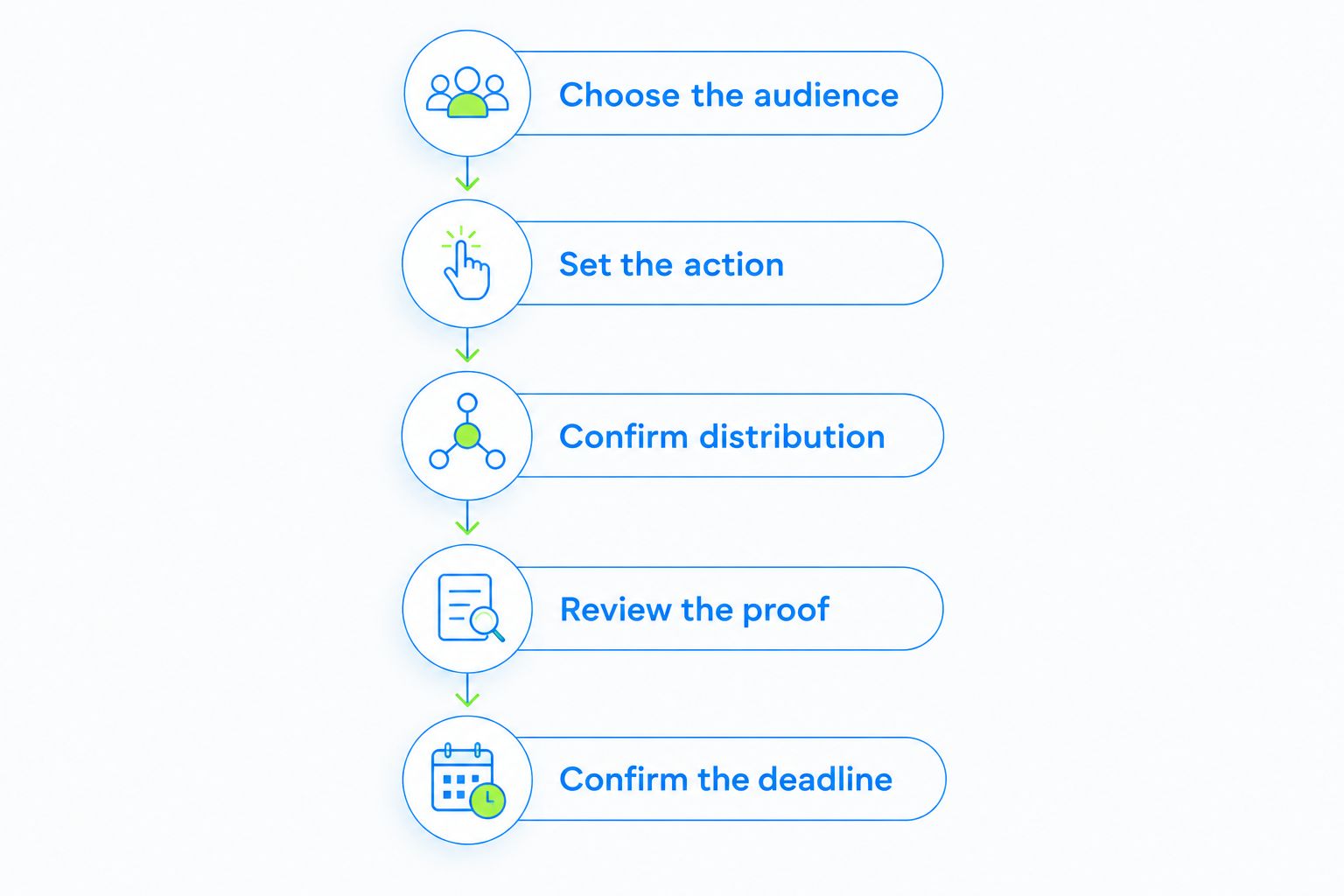
Use these steps for your 2026 print brief:
- Choose the audience: State whether the card targets existing clients, local residents or reception visitors.
- Set the action: Name the service and the booking or enquiry instruction.
- Confirm distribution: Explain whether cards will be mailed, displayed or handed out.
- Review the proof: Check spelling, service details, dates, contact information and the booking destination.
- Confirm the deadline: Give the date you need the finished cards, plus any delivery requirements.
If you plan 2 printed sides, assign each a job: the front earns attention; the reverse explains the next step. For mailed cards, accommodate the mailing provider's address and postage requirements before placing artwork on the reverse.
Ask for the printer's file requirements rather than assuming a bleed, resolution or colour setting. Also confirm whether the chosen finish supports handwriting if staff need to add a note. These are order decisions, not details to discover after printing.
Which spa and salon postcard should you choose?
Choose the single-service booking postcard unless your audience requires a different message. It is the strongest default when the campaign aims to promote a defined appointment type.
Choose a rebooking reminder for existing clients, a neighbourhood introduction for local outreach or a checkout handout for reception distribution. Use a seasonal format only when the occasion and campaign details are settled.
For postcards for spa and salon promotions, Print Fast provides a local print-contact option for Toronto businesses seeking fast-turnaround support. Request a Custom Quote with your campaign brief and confirm the postcard specifications before approving production.
FAQ
What’s the best postcard for spa and salon promotions?
A single-service booking postcard is the best default when you want to promote a defined appointment type. Choose a rebooking reminder for existing clients or a neighbourhood introduction for local outreach.
Should I mail salon postcards or hand them out?
Mail postcards when the campaign needs to reach people beyond your reception area; hand them out when the message supports an existing client conversation. Confirm mailing requirements before finalising a postal layout.
Can Print Fast help with a rush spa or salon campaign?
Print Fast offers rush printing and local support for Toronto businesses. Request a custom quote to confirm the postcard specification, production deadline and delivery requirements for your campaign.
Should a spa postcard include the whole treatment menu?
A focused promotional postcard should feature the service relevant to the campaign, not the entire treatment menu. Direct readers to your current service information when they need more detail.
Is a glossy or writable finish better for salon postcards?
Choose the finish around the card’s use. If staff will write appointment notes or personal messages, ask the printer to confirm that the selected surface accepts the intended pen.
What should go on the back of a salon postcard?
Use the back for booking instructions, location and relevant campaign conditions. For mailed cards, reserve the space required by your mailing provider for addressing and postage.
How do I track bookings from a postcard campaign?
Use a campaign-specific booking destination or ask staff to record when a client mentions the postcard. Check that your booking process can capture the information before distributing cards.
One last thing
Check the booking destination as carefully as the printed proof. A correctly printed card still fails its purpose when the service is difficult to find after the reader follows the instruction. Open the destination on a phone and complete a booking-path check before approving artwork.
Related guides
- Custom rack cards for spas and salons
- Custom label printing for cosmetics and skincare brands
- Custom envelopes for direct mail campaigns
Request a custom quote for your spa or salon postcards. Include the quantity, finished size, printed sides, distribution method and required completion date.

