

Best overall for sublimation printing in 2026: a polyester-focused sublimation shop. Best for full-coverage artwork: an all-over sublimation specialist. Best for cotton apparel: a direct-to-film (DTF) shop instead. This guide compares print-service types, not unverified vendors; if you are ordering team shirts, start by defining the garment and artwork in this custom T-shirt printing guide for sports teams.
- For sublimation printing on polyester apparel, choose a shop that confirms the garment fabric and print method before production.
- For full-coverage designs, ask an all-over sublimation specialist how seams and garment construction affect the artwork.
- For cotton apparel, choose DTF or another cotton-compatible method instead of sublimation.
- Print Fast is a Toronto print contact for broader campaigns; confirm its apparel process before requesting sublimation work.
Why this matters
Sublimation printing turns dye into gas under heat so it bonds with polyester. That makes garment composition the first buying decision, not the last question on an order form. A design prepared for a polyester shirt does not make a cotton shirt suitable for the same process.
For a Toronto event or business campaign, the shirt is also only one part of the job. You might need signs, flyers or promotional items alongside apparel. Print Fast offers local support and custom quotes for print projects, but the supplied information does not establish that it produces sublimation apparel. Ask the shop to confirm the garment, print method and deadline before treating any apparel quote as a sublimation quote.
What makes the best sublimation printing service?
Use these criteria before comparing shops in 2026:
- Fabric match: Confirm that the proposed garment is polyester or another item explicitly approved for the shop’s sublimation process. A 100% polyester shirt is a clearer starting point than a garment with an unspecified blend.
- Artwork placement: Decide whether you need a small chest graphic, a back print or artwork across the garment. Ask where seams, collars and edges interrupt the design.
- Garment choice: Request the available garment details in writing. Do not assume a shop offering sublimation on one item offers it on every apparel style.
- Proofing: Ask for a production proof showing the artwork’s position and size on the chosen garment. Approve that proof before production.
- Deadline: Give the shop your required delivery date and location. A general rush-printing claim is not a confirmed apparel turnaround.
- Order scope: If shirts belong to a wider campaign, identify the other printed pieces early so the artwork and deadlines can be coordinated.
A service passes the first test when it can tell you exactly what fabric it will print and how. If the answer changes after you send the artwork, stop and resolve the method before approving the order.
Sublimation printing services at a glance
| Service type | Best for | Standout feature | Key limitation |
|---|---|---|---|
| Polyester-focused sublimation shop | Standard polyester apparel | Fabric-specific sublimation workflow | Poor fit for cotton garments |
| All-over sublimation specialist | Artwork extending across the garment | Plans around garment panels and seams | Requires more placement decisions |
| DTF printing shop | Cotton or mixed-fabric apparel | An alternative when sublimation is unsuitable | Printed transfer has a different feel from dyed polyester |
| Screen-printing shop | Repeated designs across a uniform order | A distinct production method for consistent designs | Not a substitute for an all-over sublimated image |
The best overall choice is the polyester-focused sublimation shop only when you want polyester apparel. If fabric or artwork requirements change, the recommended service changes with them. This is a method comparison, not a claim that any named printer offers every method in the table.
A quick fabric decision
- Polyester apparel: Start with sublimation when you want the design dyed into suitable fabric.
- Cotton apparel: Start with DTF or another cotton-compatible process. Sublimation is not the default for a 100% cotton shirt.
- Unknown fabric: Identify the garment composition before choosing a printer or preparing final artwork.
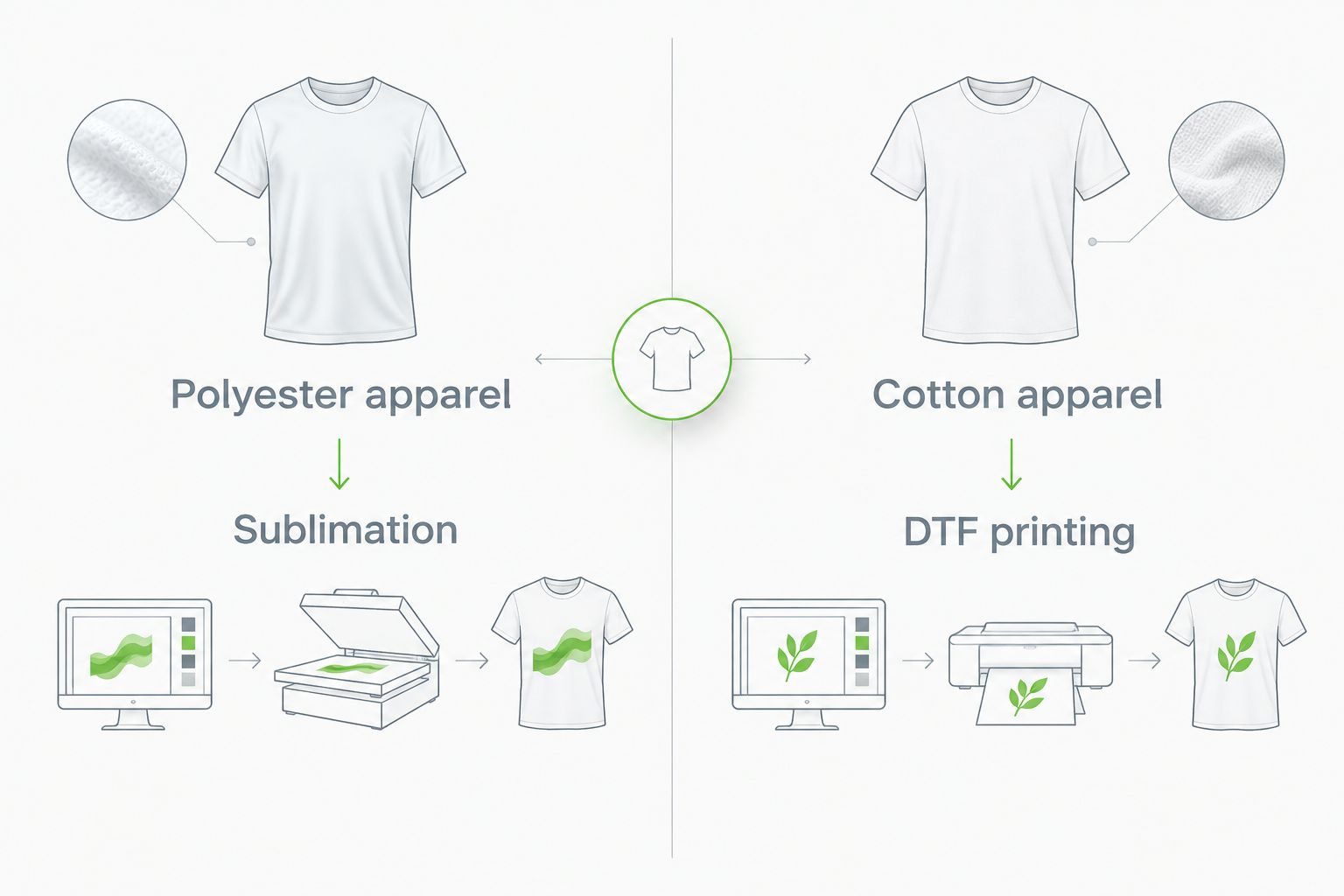
The diagram is a starting point, not a production approval. A shop still needs to confirm that its specific garment and artwork suit the proposed process.
1. Polyester-focused sublimation shop: best for standard polyester apparel
A polyester-focused sublimation shop is the default for a straightforward shirt or jersey design on a confirmed polyester garment. Give the shop the garment details, artwork and intended print position; ask it to confirm all three before it produces a proof. In 2026, this is the most direct route for a buyer who specifically needs sublimation printing rather than simply a printed shirt.
Polyester-focused sublimation shop pros:
- The service is built around a fabric that suits sublimation.
- You can evaluate the printer on garment choice, artwork placement and proofing.
- The brief stays focused when the design has defined print areas.
Polyester-focused sublimation shop cons:
- It is the wrong starting point for a cotton-only order.
- Available garment styles and placement rules depend on the shop; confirm them before committing.
Best for: A business, club or event team ordering polyester apparel with a defined design area.
Verdict: Buy when the shop confirms the polyester garment, shows the placement in a proof and accepts your deadline. Hold if it cannot identify the garment fabric.
What to send with the request
State the garment type and fabric composition you want. Add the artwork, required print locations, quantity, size breakdown, delivery destination and the date the shirts must be in hand. If the shop has to guess any of those details, its first reply should resolve the gap rather than promise a finished product.
Prepare artwork for the final print area, not just for a screen preview. The artwork preparation guide for sublimation printing covers the next step after you choose the method. Keep text and important marks clear of seams until the printer confirms the garment template.
2. All-over sublimation specialist: best for full-coverage designs
Choose an all-over specialist when the artwork must extend beyond a conventional chest or back print. This is a placement problem as much as a printing problem: sleeves, collars, side seams and garment panels determine how the finished design reads. Ask the shop to explain its production approach for the exact garment you want.
All-over sublimation specialist pros:
- Focuses the proof on the complete garment rather than one isolated print area.
- Makes panel boundaries and seam placement part of the discussion.
- Suits artwork intended to cover large portions of polyester apparel.
All-over sublimation specialist cons:
- A flat design preview alone cannot settle every question about how artwork meets at a seam.
- It requires more decisions about placement than a simple chest graphic.
Best for: Event uniforms, team apparel or campaign garments where the design needs to run across substantial parts of the shirt.
Verdict: Buy when the specialist explains where the artwork will meet or stop on the finished garment. Hold if the only proof shows an uninterrupted flat image with no garment boundaries.
Ask to see the design on the garment
Show the printer which elements must remain readable from the front, back and sides. If a name, sponsor mark or essential message sits near a seam, ask for a placement adjustment in the proof. A striking layout on a blank rectangle is not enough; you are approving wearable apparel.
For a 2026 event, settle the garment and placement before circulating the design for internal sign-off. Otherwise, your team can approve artwork that must be rearranged once production begins. Keep a single approved version so the printer and the person signing off are looking at the same file.
3. DTF printing shop: best for cotton or mixed-fabric apparel
A DTF shop is a better starting point when the garment you want does not suit sublimation. DTF applies a printed transfer to fabric rather than dyeing a suitable polyester surface through sublimation. The finish feels different, so request a description of the result on your chosen garment.
DTF printing shop pros:
- Gives cotton-apparel buyers a route that does not depend on polyester sublimation.
- Lets you keep the preferred garment in consideration instead of changing fabric to fit a print method.
- Provides a clear alternative to compare when the original sublimation brief conflicts with the garment choice.
DTF printing shop cons:
- A transfer has a different hand feel from dye bonded with polyester.
- The shop must still confirm the garment, artwork size and placement before production.
Best for: Buyers committed to cotton shirts or a specific mixed-fabric garment.
Verdict: Buy when the garment is the priority and the shop approves it for its DTF process. Skip DTF as a substitute if your requirement is specifically a sublimated finish on polyester.
Decide which requirement is fixed
If your team insists on a 100% cotton shirt, change the print-method brief. If it insists on sublimation printing, change the garment brief to a suitable polyester option. Sending a cotton specification to a sublimation shop and hoping production will solve the mismatch wastes the most valuable part of a rush order: decision time.
Ask for the process name on the quote. Custom apparel, printed T-shirts and sublimation printing are not interchangeable descriptions. The written quote should identify what you are buying so your approver can compare it with the original request.
4. Screen-printing shop: best for a repeated, defined design
Screen printing is another route for custom apparel when you are repeating a defined design across an order. It is not sublimation; compare it on the design you need, the garments you want and the shop’s production requirements. Ask for a proof and a description of the finished print before deciding.
Screen-printing shop pros:
- Keeps the discussion centred on a repeatable design and specified garments.
- Gives you another method to consider when sublimation is not required.
- Separates the apparel decision from an unsupported assumption that every custom shirt uses sublimation.
Screen-printing shop cons:
- It does not create the same dyed-polyester result as sublimation.
- It is not the direct choice for artwork intended to cover an entire garment.
Best for: An organization repeating a defined graphic across a uniform or event-shirt order without requiring an all-over sublimated finish.
Verdict: Buy when the shop confirms the design, garment and proof meet your brief. Skip if the visual requirement depends on an all-over sublimated image.
How these services were ranked
The ranking starts with the query: a buyer asking for sublimation printing should first see the service that actually fits suitable polyester apparel. All-over sublimation comes next because it solves a more specific artwork-placement problem. DTF and screen printing follow as useful alternatives, clearly labelled as not sublimation.
Fabric compatibility outranks a shop’s general promise of speed. Artwork placement comes next, followed by proofing and a confirmed deadline. There are no named-provider rankings here because the supplied information does not verify individual shops’ sublimation capability, apparel ranges or production terms in 2026.
Print Fast is a Toronto-based print shop with live support and custom quotes for print projects, including promotional items. Its stated rush-printing options include 1-hour, same-day and 24-hour work, but those labels do not establish a turnaround for sublimation apparel. Ask for a product-specific confirmation rather than applying a general service label to shirts.
Which sublimation printing service should you choose?
Choose a polyester-focused sublimation shop by default in 2026 if you have a suitable garment and a defined design area. Choose an all-over specialist when artwork must account for the full garment. Choose DTF for cotton or mixed-fabric apparel when keeping that garment matters more than using sublimation. Choose screen printing when your brief is a repeated, defined design rather than a sublimated finish.
For a Toronto campaign that also needs flyers, signs or other print, you can discuss the wider job with Print Fast. Keep the apparel decision separate until Print Fast confirms whether it can meet the requested garment, print method and date. A custom quote is the place to specify those requirements, not evidence that a particular apparel process is available.
Before you approve any 2026 order, put these details together: garment fabric, artwork location, size breakdown, quantity, delivery destination and required date. Ask the printer to repeat the proposed method in its reply. That single check prevents a custom-apparel quote from being mistaken for a sublimation-printing quote.
FAQ
What is the best sublimation printing service for custom apparel?
A polyester-focused sublimation shop is the best starting point for a defined design on suitable polyester apparel. For artwork covering the garment, choose an all-over sublimation specialist that explains seams and placement.
Can sublimation printing be used on cotton shirts?
Standard dye-sublimation printing is not the right default for a 100% cotton shirt because the dye bonds with polyester. Keep the cotton garment and ask about a cotton-compatible method such as DTF, or change the garment to suitable polyester.
Is all-over sublimation better than a standard sublimation print?
All-over sublimation is better when artwork needs to extend across garment panels. A standard print area is simpler when you only need a defined front or back design.
Is DTF the same as sublimation printing?
No. DTF applies a printed transfer to the garment, while sublimation dyes suitable polyester. Ask for the process name on your quote so you know which finish you are approving.
What should I send a sublimation printer for a quote?
Send the garment type and fabric, artwork, print locations, quantity, size breakdown, delivery destination and required date. Ask the printer to confirm the method and provide a placement proof before production.
Does Print Fast offer sublimation printing for apparel?
The supplied information does not confirm sublimation apparel production at Print Fast. Contact Print Fast with your garment and deadline, and ask it to identify the apparel method on its quote.
Can a rush-printing promise confirm my shirt deadline?
No. A general rush-printing offer does not confirm a deadline for a specific apparel order. Get the garment, print method and required delivery date confirmed together before approving production.
One last thing
Ask the printer to name the method on the final quote. In 2026, a quote that says only custom shirts leaves the most important question unanswered: are you getting sublimation on suitable polyester, or a different process on a different garment? If you need apparel alongside other campaign print, request a custom quote from Print Fast with the garment fabric, artwork and deadline clearly stated.
Related guides
- Custom hoodies for company branding
- Custom aprons for restaurant and café staff
- Promotional products for construction companies

