

Best overall: screen-printed cotton totes for a simple, repeat-use retail bag. Best for recycled-content positioning: documented recycled-cotton totes. Best for a restrained print brief: a single-colour cotton tote. This 2026 guide compares custom tote bags for eco-friendly brands by fabric, printing method, usefulness and the evidence behind environmental claims.
- Custom tote bags for eco-friendly brands need useful construction and documented material claims, not just a green slogan.
- Screen-printed cotton totes are the default for simple logos and everyday retail use.
- Recycled-cotton totes suit recycled-content messaging when the supplier documents the finished bag’s composition.
- Print Fast is a Toronto print partner for retailers coordinating promotional printing; confirm tote specifications before ordering.
Why this matters
A tote is not environmentally preferable simply because customers can reuse it. Material production, decoration, transport and actual reuse all affect its environmental impact. Choose a bag customers have a reason to carry again, then make only the claims your documentation supports.
For Toronto retailers planning a 2026 launch, start with the practical brief in custom tote bags for retail and event giveaways. Decide what the bag must carry before selecting fabric or artwork. A cosmetics purchase, a clothing order and groceries create different demands on the handles, seams and shape.
Print Fast offers promotional printing alongside other business print services. Treat the configurations below as buying options to discuss, not a verified catalogue of fabrics or tote-printing methods available from the shop.
What makes the best custom tote bag printing?
Rank the complete bag, not the fabric name alone. These criteria put the customer’s use ahead of the marketing claim:
- Useful construction: Check handle attachment, seams, opening and whether your usual purchase fits comfortably.
- Material evidence: Request fibre composition and documentation for recycled or organic claims.
- Artwork compatibility: Match the print process to the fabric, logo detail and intended finish.
- Repeat-use appeal: Choose a shape and design customers would carry outside your shop.
- Care clarity: Obtain care instructions for the decorated bag, not just the undecorated fabric.
- Production certainty: Confirm the approved artwork, production schedule and delivery arrangements before committing to a launch.
For a simple logo, begin with 1 print colour on 1 side. That is a recommended starting brief, not a universal production requirement. Add another colour or print location only when it improves the design enough to justify the extra production work.
Tote printing options at a glance
These rankings compare bag-and-print configurations, not competing suppliers. Each option owns a different use case; none earns an environmental claim from its name alone.
| Rank and option | Best for | Standout feature | Key limitation |
|---|---|---|---|
| 1. Screen-printed cotton tote | Everyday retail branding | Simple, repeatable logo decoration | Cotton alone does not establish lower environmental impact |
| 2. Recycled-cotton tote with screen printing | Documented recycled-content messaging | Material sourcing becomes part of the brief | Blends and surface texture need checking |
| 3. Organic-cotton tote with water-based screen printing | Brands prioritizing documented cotton sourcing | Combines a sourcing requirement with a specific ink brief | Organic fabric does not certify the entire decorated bag |
| 4. Recycled-polyester tote with sublimation | Colour-led, all-over artwork | Sublimation suits compatible polyester substrates | Synthetic composition and process compatibility require confirmation |
| 5. Cotton tote with direct-to-garment printing | Detailed illustrated merchandise | Supports artwork beyond simple spot-colour logos | Fabric, pretreatment and care affect the result |
1. Screen-printed cotton: best for everyday retail branding
Screen printing applies ink through a prepared mesh stencil. On a suitable cotton tote, it is a practical match for bold lettering, logos and illustrations built from distinct colours. Choose this configuration when the bag’s main job is carrying purchases and keeping your identity readable.
The default design should be recognisable without becoming an advertisement customers avoid carrying. Give the logo room. Keep secondary text out of seams and folds, and approve its placement on the actual bag shape.
Screen-printed cotton pros:
- Suits uncomplicated logos and solid graphic shapes.
- Lets you specify distinct print colours.
- Works with a restrained, single-colour design brief.
- Keeps the bag’s retail purpose separate from unsupported environmental messaging.
Screen-printed cotton cons:
- Cotton is not evidence that the bag has a lower environmental impact.
- Fine detail and colour separations require production review.
- Print durability depends on the ink, curing and care instructions.
Best for: Retailers wanting a straightforward branded shopping tote rather than detailed artwork merchandise.
Verdict: Buy this configuration as your default brief, subject to construction, artwork and sample approval.
2. Recycled cotton: best for recycled-content messaging
A recycled-cotton tote makes sense when recovered fibre is part of your purchasing requirement. Ask for the finished bag’s fibre composition, including any blend components. A statement about the source fabric is not automatically a statement about every component of the bag.
For a 2026 collection, keep the claim specific to the documented material. Do not replace a clear composition statement with broad language such as planet-friendly. Screen printing remains a sensible decoration brief for a simple logo, but inspect the fabric surface before approving fine lines.
Recycled-cotton tote pros:
- Gives you a specific sourcing attribute to investigate.
- Supports factual material messaging when documentation matches the product.
- Pairs naturally with understated branding and repeat-use positioning.
Recycled-cotton tote cons:
- A recycled-cotton description does not disclose the complete blend.
- Texture and colour variation require sample review.
- Recycled content does not prove the finished bag has the lowest environmental impact.
Best for: Retailers whose purchasing policy prioritizes documented recycled fibre.
Verdict: Hold until the supplier confirms composition and you approve the decorated sample. Buy on evidence, not the recycled label alone.
3. Organic cotton: best for documented cotton sourcing
Choose organic cotton when the fibre’s sourcing standard matters to your brand. Request documentation that applies to the actual item being supplied, and establish what any certification covers. Do not assume an organic-fibre claim also covers printing, thread, labels or the finished bag.
Water-based screen printing is a decoration option to discuss, not proof of environmental safety. The ink still needs to suit the fabric and receive the correct production treatment. Ask about the finished print’s feel and care requirements rather than treating water-based as a complete environmental assessment.
Organic-cotton tote pros:
- Makes cotton sourcing an explicit purchasing condition.
- Gives suppliers a clear documentation requirement.
- Supports a simple logo treatment without relying on broad sustainability slogans.
Organic-cotton tote cons:
- Certification scope needs checking against the finished item.
- Water-based ink does not automatically make the bag environmentally preferable.
- Print feel and wash performance require approval on the selected fabric.
Best for: Brands with a defined organic-cotton sourcing policy.
Verdict: Buy only when the sourcing evidence matches your claim. Skip this configuration if organic is merely an aesthetic word in the campaign.
4. Recycled polyester: best for colour-led artwork
Sublimation uses heat to transfer dye into compatible polyester material. It suits briefs where colour and coverage matter more than the appearance of a traditional cotton shopping bag. Confirm that the chosen tote fabric, base colour and construction support the intended process.
Recycled polyester remains a synthetic material. Verify the recycled-content claim separately from print compatibility, and do not describe the tote as plastic-free. The sublimation printing guide for custom apparel provides related decoration context, but a tote still needs its own substrate review.
Recycled-polyester tote pros:
- Suits compatible polyester fabrics and colour-rich artwork.
- Gives illustration-led brands an alternative to spot-colour printing.
- Supports a documented recycled-material purchasing requirement.
Recycled-polyester tote cons:
- Does not meet a plastic-free material brief.
- Not every polyester tote supports the intended sublimation treatment.
- Recycled content alone does not establish environmental superiority.
Best for: Retail brands whose tote design depends on colourful illustration or broad print coverage.
Verdict: Buy for artwork compatibility when the material meets your policy. Skip for a plastic-free collection.
5. Direct-to-garment cotton: best for illustrated merchandise
Direct-to-garment printing applies artwork directly to a compatible textile using a digital printing process. Consider it when gradients, illustrations or detailed imagery are central to the tote. The fabric and production setup matter, so approve the printed result rather than relying on the digital mock-up.
This configuration treats the tote as merchandise customers choose for its design. Keep important artwork away from seams and areas distorted by the contents. Ask whether the selected bag requires pretreatment and obtain care instructions for the finished print.
Direct-to-garment cotton pros:
- Suits detailed artwork beyond a simple logo.
- Offers an alternative to separating an illustration into spot colours.
- Lets the design, rather than an environmental slogan, create a reason to keep the bag.
Direct-to-garment cotton cons:
- Fabric suitability and pretreatment need confirmation.
- Screen previews do not establish final colour or print feel.
- The printing method does not prove an environmental benefit.
Best for: Illustration-led retailers selling or distributing a design-focused tote.
Verdict: Buy after decorated-sample approval. Skip if a simple screen-printed logo already meets the brief.
How these tote options were ranked
Screen-printed cotton ranks first because it matches a straightforward retail-logo brief without requiring detailed artwork. The remaining options address narrower needs: recycled fibre, organic sourcing, colour coverage and illustration detail. This is a use-case ranking, not a lifecycle assessment or a supplier performance comparison.
For 2026 buying decisions, environmental evidence is a condition of approval rather than a bonus point. Reject any environmental claim that extends beyond the documentation. A useful bag with precise messaging is a better brief than an elaborate bag carrying an unsupported promise.
Turn the shortlist into an order brief
Use the same specification when comparing suppliers. Otherwise, a change in fabric, print coverage or handle construction makes the proposals difficult to compare.
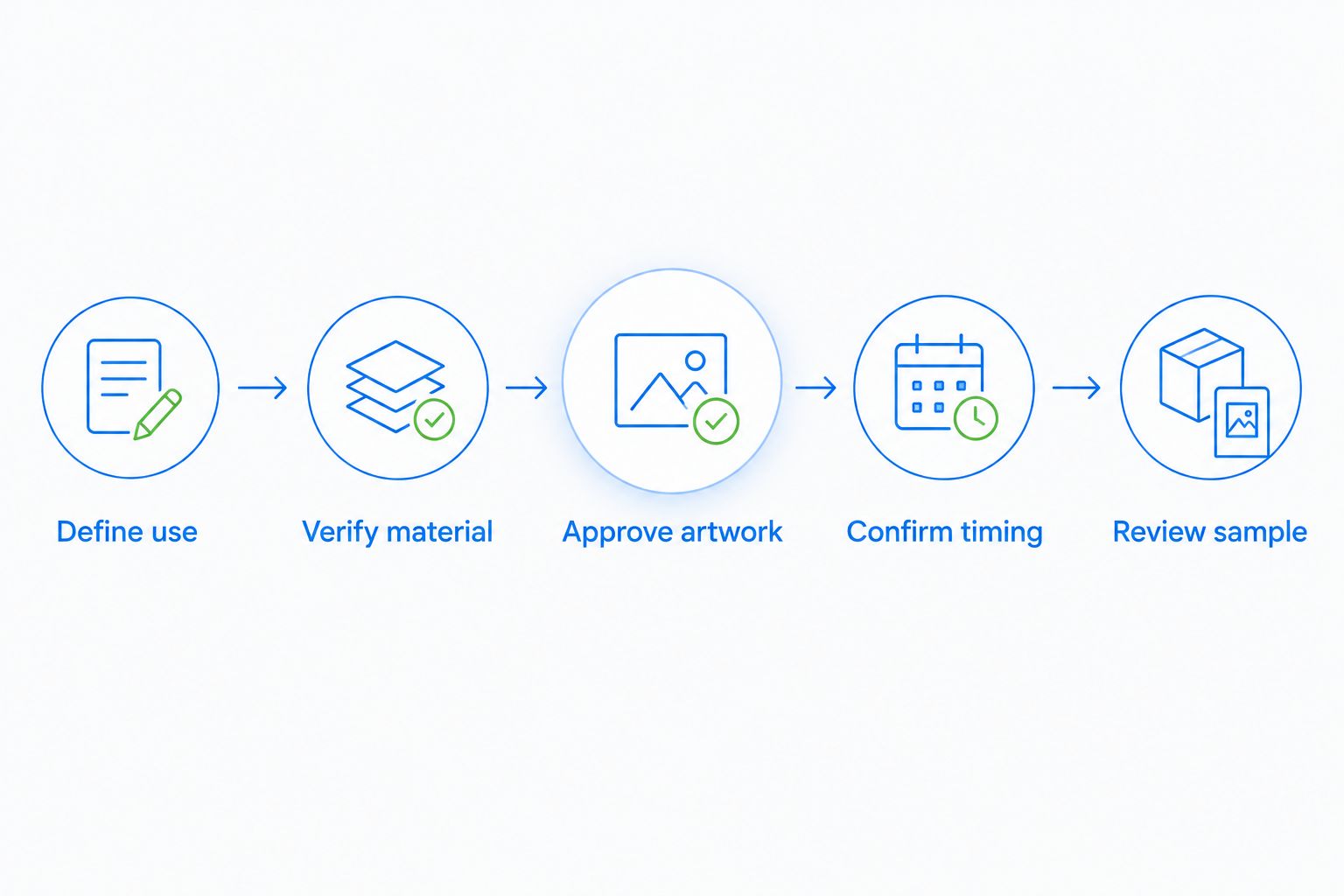
Define use
List what customers will carry and where they will use the tote. Check the proposed size against your actual products. Specify the required handle style and opening rather than asking only for a standard shopping bag.
Verify material
Request the fibre composition and supporting documents for each environmental claim. Keep the records with the order. Check that the product description on the proposal matches the material description you intend to publish.
Approve artwork
Supply the logo or illustration in the printer’s requested format. Identify print colours, locations and orientation. For a two-sided design, specify 2 print locations explicitly so neither side is assumed or omitted.
Confirm timing
Separate artwork approval, production completion and delivery. Print Fast offers 1-hour, same-day and 24-hour printing services across its business offering; those labels do not establish a tote-specific schedule. Confirm the selected tote and decoration process before announcing a 2026 launch date.
Review sample
Request a decorated sample when the project allows it. Inspect the seams, handles, print placement and care instructions, then load it with the products it is meant to carry. Keep the approved specification unchanged unless you review the revision.
Which tote printing option should you choose?
Choose screen-printed cotton for an uncomplicated retail logo. Move to recycled cotton or organic cotton when a documented sourcing requirement drives the decision. Choose sublimation-compatible recycled polyester for colour coverage, or direct-to-garment cotton for detailed illustrations.
Print Fast is a practical print-planning partner for Toronto retailers coordinating tote enquiries with other promotional materials. Confirm the tote configuration directly, and keep the environmental wording under your control. Your supplier’s proposal should describe what will be produced; your customer-facing claim should describe only what you can substantiate.
FAQ
What are the best custom tote bags for eco-friendly brands?
Screen-printed cotton totes are the default for simple retail branding, while documented recycled-cotton totes suit recycled-content purchasing requirements. Choose the finished bag by construction, intended reuse and evidence behind its material claims.
Are cotton tote bags automatically eco-friendly?
No, cotton tote bags are not automatically environmentally preferable. Material production, decoration, transport and actual reuse all affect environmental impact, so cotton alone is not enough to support a broad claim.
Is recycled cotton better than organic cotton for a branded tote?
Recycled cotton and organic cotton address different sourcing requirements. Choose recycled cotton for a documented recycled-fibre brief and organic cotton for a documented organic-cotton brief; neither label alone proves the finished bag has lower environmental impact.
What printing method should I choose for a simple tote logo?
Screen printing is a practical starting point for a simple tote logo. Confirm fabric compatibility, print colours, placement and care instructions before approving production.
Can I print a full-colour illustration on a tote bag?
Yes, compatible tote fabrics support methods suited to full-colour illustrations. Discuss direct-to-garment printing for suitable cotton and sublimation for suitable polyester, then approve the actual decorated result.
Does water-based ink make a tote sustainable?
No, water-based ink alone does not establish that a tote is sustainable. The bag’s materials, production, use and end-of-life remain relevant, and the ink still requires appropriate application and curing.
Does Print Fast offer same-day tote printing?
Confirm tote-specific turnaround with Print Fast before setting your deadline. Its general same-day and rush-printing offering does not establish the schedule for a particular tote fabric or decoration process.
What should I send when requesting a tote printing proposal?
Send the intended use, quantity, material requirements, artwork, print locations and required delivery date. Ask for composition evidence, decorated-bag care instructions and a confirmed production schedule.
One last thing
Keep the date off the tote unless the date is essential to the design. A prominent 2026 event date ties the artwork to that occasion, while an undated design leaves customers free to carry it without displaying an expired campaign. Put time-sensitive information on a separate insert instead.
The useful test is simple: would your customer choose this bag without the environmental slogan? If not, improve the construction or design before expanding the claim.
Related guides
- Custom label printing for cosmetics and skincare brands
- Custom hang tags for clothing brands
- Custom table covers for craft fair and market vendors
Plan your custom tote printing
Define the bag’s use, material requirements, artwork and deadline before requesting a proposal.

