

NFC business cards are worth it for small businesses in 2026 when you regularly meet prospects and want to share contact details or a booking page without asking people to type. They are less useful when customers need a card to take away, and their value depends on the linked page, phone compatibility and your follow-up—not the tap itself.
- Is NFC business cards worth it? Yes for frequent networking; printed business cards remain useful for leave-behinds.
- NFC shares a destination; it does not guarantee a saved contact, enquiry or sale.
- Use a QR code and readable contact details as alternatives to tapping.
- Print Fast offers rush business card printing for Toronto businesses that need physical cards for meetings.
Is NFC business cards worth it for small businesses in 2026?
Choose NFC for repeated, face-to-face introductions. Choose printed cards when the recipient needs something to keep. A combined approach covers both situations, but it also means maintaining a digital destination and keeping printed details current.
An NFC card can hold a web address that a compatible phone reads at close range. Opening that address is separate from saving a contact or submitting an enquiry. Your recipient still decides what happens next.
For the practical setup work behind that exchange, see the guide to setting up an NFC business card.
| Approach | Best for | Main advantage | Main limitation |
|---|---|---|---|
| Reusable NFC business card | Owners who regularly meet prospects in person | Shares a digital destination through a tap | Requires compatible phone behaviour and a working destination |
| Printed business card | Leave-behinds, referrals and reception counters | Keeps essential details readable without a phone | Printed information cannot change after production |
| Printed card with a QR code | Businesses wanting a takeaway with digital access | Combines readable details with a scannable link | Scanning a web link still requires access to the destination |
| NFC plus printed backup | Teams working across different meeting settings | Gives recipients a choice of contact method | Adds more items and information to maintain |
These are different contact-sharing methods, not different guarantees of business results. A readable printed card can serve your customer better than a tap that opens a confusing page.
Why this matters
A business card should help someone continue a conversation. The format matters only when it makes that next step easier.
For a Toronto consultant, that step might be saving contact details. For a contractor, it might be requesting an estimate. For an event organizer, it might be opening an enquiry page. Decide on the action before choosing the card.
In 2026, assess NFC as part of your contact-sharing process rather than a replacement for it. You still need clear information, a useful destination and a reason for the recipient to respond.
NFC business cards: best for frequent in-person networking
A reusable NFC card fits an owner who attends networking events, visits clients or regularly introduces a service in person. You present the card, help the recipient open the link and keep the card for your next conversation.
The advantage is a direct route to your information. You can send someone to a contact page, portfolio or booking destination without spelling out a web address.
The limitation is the interaction itself. Your recipient needs a compatible phone and must be willing to use it during the conversation. If tapping becomes an explanation rather than a convenience, offer another method immediately.
Before choosing a provider, confirm:
- Whether the recipient needs an app for the intended action.
- Whether you control the destination address.
- Whether profile editing depends on an ongoing account.
- Whether you can export information you collect.
- What happens to the link if you stop using the service.
Those answers determine how much control you retain. Do not assume that every NFC card includes the same profile features, editing tools or integrations.
Printed business cards: best for takeaways and referrals
Printed cards fit situations where your contact information needs to remain with the recipient. They belong in a meeting folder, beside a reception desk or in the hands of someone recommending your business.
The advantage is independence from a phone at the moment of exchange. Your name, role and contact details remain visible. The drawback is permanence: an outdated number or address stays on the card until you replace it.
Print Fast is best for Toronto small businesses needing same-day or rush printed business cards. Confirm the requirements and turnaround for your specific job before planning the handout.
Printed business cards still need restraint. Prioritize your business name, your name where relevant, your role and the contact method customers should use. A crowded card does not become more helpful because it contains every service you offer.
NFC with a printed backup: best for mixed meeting settings
A combined approach suits businesses that move between networking, client visits, events and unattended displays. Keep the reusable NFC card for live introductions and carry printed cards for people who want a takeaway.
The benefit is choice. The drawback is maintenance: the digital profile and printed information must agree. A changed phone number should trigger a review of both.
You can also print a QR code alongside readable details. A QR code provides an alternative to NFC tapping, but a QR code that opens a website does not remove the need to reach that website.
Do not make scanning mandatory. Someone should be able to identify your business and contact you from the card alone. That matters when the recipient is busy, has no connection or simply prefers not to use a phone.
Why NFC business card value varies
The value of NFC business cards in 2026 depends on how you use them. Assess these factors before committing:
- Meeting frequency: Repeated introductions give a reusable card a clear role. Occasional networking gives you fewer opportunities to use it.
- Recipient preference: A digital exchange works only when the other person wants it. Keep a readable alternative.
- Destination quality: A focused contact page supports the conversation. An unrelated page makes the recipient search again.
- Information changes: A stable URL can point to updated information without changing the card, provided you retain control of that URL.
- Team administration: Staff changes create work around profile access, ownership and departing employees.
- Follow-up process: Opening a page is not the same as establishing permission or agreeing on a next step.
These factors also explain why another business's experience is not a reliable forecast for yours. A busy event representative and an owner who mostly receives telephone enquiries have different contact-sharing needs.
Judge the card against your actual meetings, not the novelty of the interaction. If the recipient cannot complete the intended action comfortably, simplify the process before adding features.
How do you test whether NFC business cards are worth it?
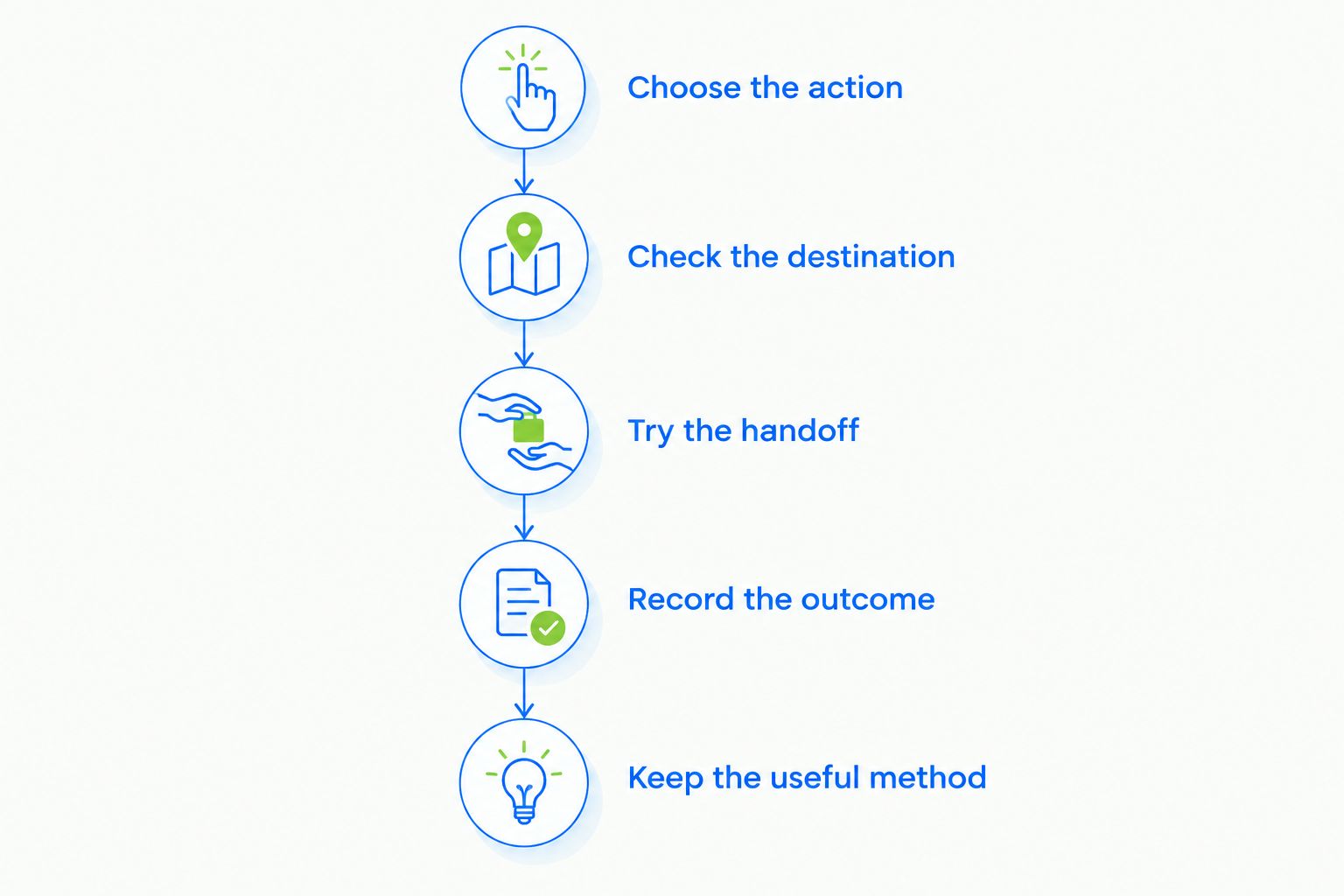
Run a small trial before changing your team's whole approach. The following is a suggested test plan, not a published performance benchmark: use the card in 10 conversations across 2 events or meeting days, then review the experience 7 days after the final meeting.
Choose the action
Pick the next step you want to support. Saving your contact details, requesting an estimate and booking a consultation are different actions. Build the destination around the one that matches the conversation.
Check the destination
Open the page on a phone before sharing it. Check that the name, contact details, links and intended action are correct. Remove outdated information and anything that distracts from the reason you exchanged details.
Try the handoff
Test the tap and QR code on different phones you can access. Check the instructions you will give, not just whether the card works in your own hand. Keep printed contact details ready when a recipient prefers them.
Record the outcome
Note whether the recipient opened the destination, saved your information or agreed to a follow-up. Keep those outcomes separate. A page opening shows that the handoff worked; it does not establish that the person became a qualified prospect.
Keep the useful method
After the trial, retain NFC where it makes introductions easier. Keep printed cards where customers ask for them. If people repeatedly struggle with the destination, fix that problem before ordering more cards.
Will NFC business cards get you more leads?
NFC business cards provide a way to share information; they do not guarantee more leads. A useful destination can support an enquiry, but the recipient still needs a reason to contact you.
Avoid treating every tap as a new prospect. A recipient might open the page to check your name, revisit a previous conversation or simply test the technology. Record enquiries and agreed follow-ups separately from page activity.
For your 2026 review, ask a practical question: did the method help the right people take the next step? That is a more useful decision than whether the tap attracted attention.
Can you update NFC business cards without replacing them?
You can update the information behind an NFC business card when its stored link leads to a page you can edit. That does not mean every card or provider lets you change the encoded address itself.
Separate the physical card, the encoded destination and the page content when checking a service. Confirm who controls each part. A page you can edit today is not necessarily a page you can keep if an account closes.
What should small businesses check before sharing contact details?
Share only the information intended for business contacts. A public contact page does not need your private address, personal schedule or internal notes.
Opening your profile also does not authorize you to add someone to a marketing list. If your destination collects information, explain what the form is for and review the consent requirements that apply to your use.
For a team, assign responsibility for profile changes. Record who can edit each destination and what should happen when an employee leaves. Keeping the physical card is not enough if the account behind it remains under someone else's control.
FAQ
Are NFC business cards worth it for a small business in 2026?
NFC business cards are worth it when you regularly meet prospects and want to share a useful digital destination during the conversation. Keep printed cards for recipients who need a takeaway or prefer not to use a phone.
Do NFC business cards work with every phone?
NFC business cards do not work identically with every phone. Compatibility, settings and reading behaviour differ, so test the intended exchange and include readable contact details or a QR alternative.
Does someone need an app to read my NFC business card?
An NFC card containing a standard web link can open a destination on compatible phones without a dedicated card-provider app. Confirm the requirements for your chosen card and any additional features.
Can NFC business cards work without internet access?
Reading an NFC tag and loading its website are separate actions. A card that opens an online profile needs a connection to load that profile, so keep essential contact details visible on the card.
Is a QR code better than an NFC business card?
A QR code is better when the recipient prefers camera scanning or NFC tapping is not practical. NFC is useful for a guided in-person exchange; neither method guarantees a saved contact or an enquiry.
Will tapping an NFC card automatically save my contact details?
Tapping an NFC card does not guarantee that your contact details are saved. The destination and phone determine the available steps, and the recipient still needs to complete the action.
Can Print Fast help when I need printed business cards quickly?
Print Fast offers same-day and rush business card printing for Toronto businesses. Request a custom quote and confirm the turnaround for your artwork, quantity and requirements before scheduling your handout.
One last thing
Test the destination with someone who has not seen it before. Ask that person to find your contact details and complete the intended next step without coaching.
A card can function perfectly while its destination fails the conversation. Before your next 2026 networking event, check the page, the printed details and the fallback—not just the chip.
Related guides
- NFC business cards for networking events
- Connecting an NFC business card to Google Contacts
- Same-day business cards for last-minute meetings
Need physical cards for your next meeting? Request a custom quote for your business cards from Print Fast.

