

Best overall for campaign lawns: corrugated polypropylene. Best for repeated outdoor use: solid aluminium. Best for large, rigid displays: aluminium composite. This 2026 guide ranks election lawn-sign materials by durability and installation fit, with exterior plywood and coated paperboard reserved for narrower uses.
- Lawn signs ranked by material election guide: choose corrugated polypropylene for routine supporter-lawn installations.
- Solid aluminium suits repeated outdoor use; aluminium composite suits large, framed campaign displays.
- Exterior plywood needs protected edges; coated paperboard belongs in sheltered, temporary displays.
- Match the panel, printing and mounting hardware before approving election signs.
Why this matters
The most durable panel is not automatically the best lawn sign. A rigid sheet needs suitable posts or a frame. A lightweight fluted panel needs compatible stakes and the correct flute direction.
For Toronto/GTA campaign teams, the practical question is whether volunteers can install, inspect and remove the complete sign without damaging it. Start with your locations, then choose the material. The guide to election lawn signs for Toronto candidates covers the wider campaign decision.
Print Fast is a Toronto-based printing partner for campaign teams that need custom quotes and local support. For election lawn signs, confirm the substrate and installation requirements rather than treating the material name as a complete specification.
What makes the best election lawn-sign material?
Compare election sign durability through weather resistance, mounting strength and handling—not the material name alone. Judge each material against these criteria before choosing political yard signs for your 2026 campaign:
- Moisture resistance: The panel, exposed edges and printed surface must suit outdoor exposure.
- Mounting strength: Stakes, posts, fasteners and frames must match the sheet construction.
- Handling resistance: Consider bending, denting, chipped edges and damage during volunteer transport.
- Installation effort: A material that needs tools and framing serves a different job from a stake-mounted lawn sign.
- Reuse potential: Durable panels need reusable artwork, sound mounting points and protected storage.
- Print suitability: Outdoor durability depends on the printing system as well as the substrate.
Ask for the complete construction. “Plastic sign” does not distinguish fluted polypropylene from a solid plastic sheet, and “metal sign” does not identify its mounting requirements. For weather-resistant election signs, ask about rain exposure, UV resistance and print fading separately; a water-resistant substrate does not establish the printed graphic’s outdoor lifespan.
Election lawn-sign materials at a glance
The ranking below prioritizes ordinary supporter-lawn deployment, then separates specialist uses. It is a buying recommendation, not a laboratory ranking of material strength.
| Rank and material | Best for | Standout feature | Key limitation |
|---|---|---|---|
| 1. Corrugated polypropylene | Routine supporter-lawn installations | Lightweight fluted construction accepts compatible stakes | Creases and damaged stake channels weaken the panel |
| 2. Solid aluminium | Repeated outdoor use | Moisture-resistant metal panel | Requires suitable mounting; dents remain visible |
| 3. Aluminium composite | Large, framed campaign displays | Rigid sandwich-panel construction | Needs a support system matched to the panel |
| 4. Exterior plywood | Custom post-mounted installations | Accepts conventional woodworking fasteners | Exposed edges need protection from moisture |
| 5. Coated paperboard | Sheltered, temporary displays | Lightweight board for protected settings | Coating does not make exposed edges weatherproof |
1. Corrugated polypropylene: best for supporter-lawn signs
Corrugated polypropylene, also called corrugated plastic, is a fluted plastic sheet used for temporary outdoor signage. For campaign yard signs, its hollow channels accept compatible wire stakes without a separate frame. Confirm that any H-stakes you order match the panel’s flute size and direction.
Corrugated polypropylene is the default choice for election lawn signs distributed across many supporter properties. It combines moisture resistance with straightforward handling. The mounting arrangement still needs checking: stakes must fit the channels, and the channels must run in the direction required for insertion.
Corrugated polypropylene pros:
- The polypropylene substrate resists moisture absorption.
- Lightweight panels are straightforward to carry between installation locations.
- Compatible stakes provide a simple lawn-mounting method.
- Flat panels can be stacked for organized campaign distribution.
Corrugated polypropylene cons:
- Creasing damages the panel and can spoil its appearance.
- Rough stake insertion can crush or split the channels.
- Wind performance depends on panel size, stakes and installation.
Best for: Supporter lawns where campaign volunteers need a repeatable installation method.
Before approving your 2026 order, ask how the stakes enter the sheet and how the panels should travel. Keep panels flat rather than bending them into a crowded vehicle. Inspect the stake channels before sending previously used signs back out.
Verdict: Buy for routine campaign lawn-sign deployment.
2. Solid aluminium: best for repeated outdoor use
Solid aluminium signs use a metal sheet rather than a hollow plastic panel. Aluminium does not rust like unprotected steel, but its printed finish, fasteners and mounting holes still need attention.
Choose solid aluminium when repeated handling and outdoor exposure justify a more permanent mounting approach. Do not assume that a metal sheet can use the same wire stakes as a fluted plastic sign.
Solid aluminium pros:
- The panel does not absorb rainwater.
- Metal construction suits securely fastened outdoor displays.
- Reusable panels work with artwork that remains relevant.
- A solid sheet avoids the crushed-channel problem of fluted signs.
Solid aluminium cons:
- Dents and bent corners can remain visible after an impact.
- Edges require careful handling.
- Posts, brackets or frames need to suit the panel and location.
Best for: Campaign locations with a suitable mounting system and a genuine reuse plan.
For a 2026 campaign, review the wording before choosing a reusable panel. A candidate name and general message serve a different purpose from a sign dominated by a single event date. Durable material cannot make outdated artwork useful.
Verdict: Buy for repeated use with suitable mounting.
3. Aluminium composite: best for large, framed displays
Aluminium composite consists of aluminium faces bonded to a core. Its sandwich construction produces a rigid panel suited to applications where a flat display face matters.
This is a different installation category from a volunteer placing a small sign on a lawn stake. Specify the frame, posts, attachment points and site conditions before selecting the sheet.
Aluminium composite pros:
- Rigid construction supports a flat display face.
- The panel suits purpose-built sign frames.
- A broad surface accommodates larger campaign layouts.
- Properly supported panels provide an alternative to timber construction.
Aluminium composite cons:
- Panel grades and core constructions differ.
- Unsupported areas and poorly positioned fixings compromise the installation.
- Damaged corners and faces can be difficult to restore neatly.
Best for: Large campaign displays installed on a planned support structure.
Ask for the actual panel specification, not simply an “aluminium” description. Solid aluminium and aluminium composite are different products. Confirm the intended outdoor application and the fastening method with the supplier and installer.
Verdict: Buy for framed displays; skip for ordinary wire-stake installations.
4. Exterior plywood: best for custom post-mounted installations
Exterior plywood is a wood-based panel made with adhesive intended for exterior conditions. That designation does not make exposed wood immune to moisture, swelling or surface deterioration.
Plywood belongs in a campaign plan when you have a defined construction method and someone responsible for finishing it. Treat the edges, faces and fastener locations as part of the sign—not as details to solve after printing.
Exterior plywood pros:
- The panel accepts conventional woodworking fasteners.
- Custom timber supports can be built around the sign.
- A prepared surface can carry campaign graphics.
Exterior plywood cons:
- Exposed edges and penetrations need moisture protection.
- Handling is more demanding than distributing lightweight plastic panels.
- Surface preparation and finishing add installation work.
Best for: Custom post-mounted signs managed by a team with fabrication skills.
For 2026 campaign planning, assign responsibility for finishing and installation before choosing plywood. An unfinished edge is not corrected by placing a graphic on the front face. Inspect stored panels for warping, surface damage and loose layers before reuse.
Verdict: Hold unless the finishing and support plan is settled.
5. Coated paperboard: best for sheltered temporary displays
Coated paperboard provides a printable board surface for protected applications. Its coating does not turn a paper-based core into a weatherproof outdoor panel.
Use it where shelter is part of the installation: an indoor campaign office, a protected display or another location away from direct weather. Do not treat lamination or a coated face as proof that cut edges can withstand rain.
Coated paperboard pros:
- Lightweight sheets are straightforward to carry.
- The printable surface suits temporary campaign messaging.
- Protected displays do not require an outdoor mounting system.
Coated paperboard cons:
- Moisture entering exposed edges can damage the board.
- Bending and crushing affect both appearance and stiffness.
- Outdoor suitability depends on the specific construction, not the word coated.
Best for: Sheltered displays rather than exposed supporter lawns.
Keep paper-based campaign materials separate from outdoor sign stock during packing. Clear labels help volunteers avoid installing an indoor board outside simply because its artwork matches the lawn signs.
Verdict: Skip for exposed lawns; buy only for protected displays.
Match the material to the installation
A sign is a system: panel, printed face, mounting hardware and support. Decide those parts together, including single-sided or double-sided printing and the ground stakes, posts or frame. Changing the sheet without changing the support can create an installation that no longer fits its original purpose.
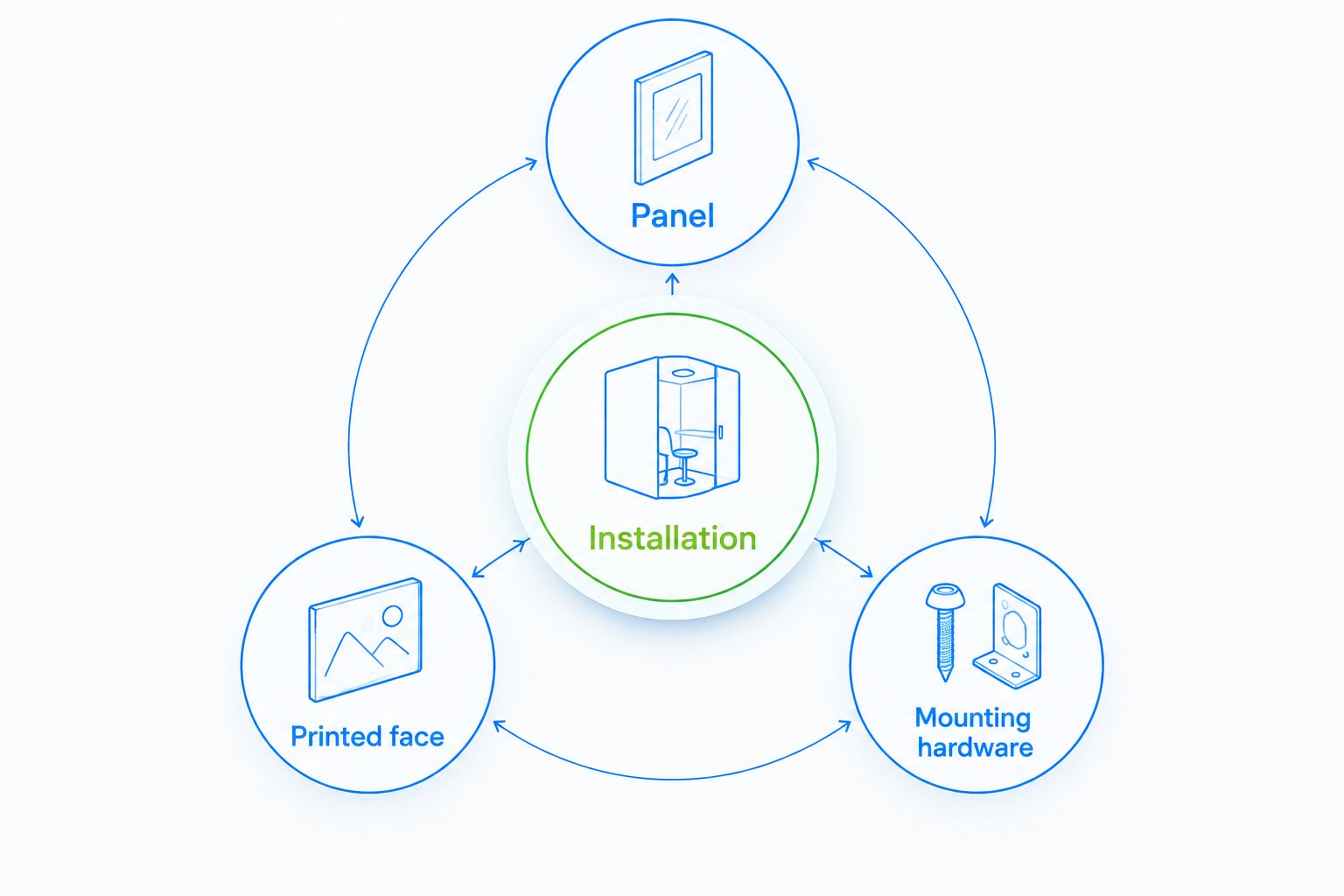
Use this approval sequence before releasing artwork:
- Record the location. Identify lawn, fence, wall or framed display, plus whether the site is sheltered or exposed.
- Confirm the construction. Request 3 material details: substrate, thickness and outdoor print specification.
- Match the hardware. Confirm stake compatibility, fixing positions or the required frame.
- Approve the layout. Specify whether you need 1 printed face or 2 printed faces, then approve the proof for that configuration.
- Assign inspection. Name the person responsible for checking loose hardware, damaged panels and removal.
For Print Fast election lawn-sign enquiries, send the installation details with the artwork. A request that names only the quantity leaves the mounting method unresolved.
How the materials are ranked
Corrugated polypropylene ranks first for ordinary campaign lawns because its construction supports a practical stake-mounted installation. Solid aluminium and aluminium composite serve more permanent or more structured uses. Plywood requires finishing work, while coated paperboard belongs in protected settings.
The criteria are moisture resistance, mounting fit, handling, installation effort, reuse and print suitability. No fixed lifespan or wind rating is assigned to a material without a product-specific specification.
Which election lawn-sign material should you choose?
Choose corrugated polypropylene unless your installation requires a different construction. Move to solid aluminium for repeated outdoor use, or aluminium composite for a large display with a designed support system.
Print Fast suits Toronto/GTA campaign teams seeking custom quotes and local support for election printing. Confirm the material, hardware and required handover date together. The company offers 1Hr, Same Day, 24Hr and Rush printing services; request confirmation for your specific election-sign job rather than applying those labels to every material.
FAQ
What’s the best material for election lawn signs?
Corrugated polypropylene is the default recommendation for routine supporter-lawn signs. Its fluted construction works with compatible stakes, while the plastic substrate resists moisture absorption.
Are aluminium election signs better than plastic signs?
Solid aluminium suits repeated outdoor use, while corrugated polypropylene suits straightforward lawn-stake installations. Choose according to the mounting system and handling requirements rather than treating metal as the automatic winner.
Are corrugated plastic election signs waterproof?
The polypropylene substrate resists water absorption, but that does not establish the durability of the complete printed sign. Confirm the outdoor print specification and mounting arrangement separately.
Can election signs withstand strong wind?
A material name alone does not establish wind resistance. Panel dimensions, support, fasteners and site exposure all affect the installation; request a suitable mounting specification.
Can I use plywood for campaign lawn signs?
Exterior plywood suits custom post-mounted campaign signs when the finishing and support plan is defined. Protect exposed edges and penetrations rather than relying on the exterior designation alone.
Should election signs be printed on both sides?
Choose double-sided printing when viewers need to read the sign from opposite directions. Confirm the viewing position and artwork orientation before approving the proof.
Can election lawn signs be reused?
Reuse signs only when the panel, graphics and mounting points remain suitable. Inspect stored signs for damage and check that the candidate details and campaign wording are still correct.
One last thing
Check the stake direction before approving a fluted sign. A panel can have the right artwork and material but the wrong channel orientation for its intended stake. Put that check beside the artwork approval, not on the volunteer installation list.
Related guides
- Custom lawn signs for political campaigns
- Election campaign printing checklist for candidates
- Best candidate palm card printing for Toronto campaigns
Request a custom quote from Print Fast for your 2026 election lawn signs. Include the material, dimensions, quantity, printed faces, mounting requirements and required handover date.

