

Brewery table tent printing is the production of freestanding tabletop cards that help taproom guests choose a drink, discover an event or open a menu. This guide covers table tent cards for breweries in 2026, where changing tap lists, wet tables and limited counter space make a focused message more useful than a miniature menu.
- Table tent cards for breweries work best with one message and one clear action per face.
- Use QR codes for changing tap lists; keep essential information readable without a phone.
- Print Fast is best for Toronto businesses seeking a local rush-print partner.
- Test a folded sample on an actual taproom table before approving production.
Why table tent printing matters for breweries
A taproom table is a decision point, not a noticeboard. Your guest needs to understand what the card offers without moving glasses, opening several pages or asking a server to explain the headline.
For your 2026 taproom plan, give table tents a narrower job than the main menu. Use them to introduce a tasting flight, explain how to order or announce a scheduled brewery event. Keep the full drink list elsewhere when frequent changes would make the printed card inaccurate.
The same layout principles apply to table tent cards for restaurant menus, but brewery cards need particular attention to tasting terminology, rotating selections and shared-table placement. A useful card supports the conversation already happening at the table.
Choose a table tent when the message belongs beside the guest's drink. Choose another format when the information needs to be seen from the entrance or read as a detailed reference.
How to plan brewery table tent cards
Define one job for each card
Start with a handwritten brief before opening a design tool. Complete this sentence: after reading this card, the guest should do what? If the answer contains several unrelated actions, separate the messages.
For example, a flight card can explain the tasting format and invite guests to ask about the current selection. An event card can identify the event, date and booking action. Combining both with merchandise, social accounts and a brewery history makes the reader choose what matters.
Set a working limit of 1 primary action per card face. This is a design recommendation, not a performance benchmark. It gives your team a clear editing rule when everyone wants another message added.
Assign an owner before design starts. The person responsible for events should approve event details; the person managing the tap list should approve beer descriptions. A printer cannot resolve conflicting instructions from different departments.
- Write the intended guest action in plain language.
- Choose the audience: first-time visitors, regulars or event guests.
- Remove information that does not support the action.
- Name the person who approves the final wording.
Match the format to the table
Make a folded paper mock-up using an office printer or plain paper. Place it where guests actually sit, with glasses, a tasting paddle, food and any existing menu holders in position. Test the footprint before refining the artwork.
A conventional folded tent gives you 2 outward-facing panels. Decide whether both panels repeat the same message or serve different seating positions. Repeating the main action helps when guests sit opposite each other; different panels require more deliberate placement.
Do not select dimensions from a screen preview alone. Measure the usable table area and ask your printer for a matching production template. Keep important copy away from folds, joins and trimmed edges according to that template.
For patio use, check how the sample behaves in the actual location. A freestanding paper card is not automatically suitable for an exposed table. Decide whether staff will bring cards indoors or use a different display method.
- Measure the clear space left after normal table service.
- Check readability from each occupied seat.
- Fold a full-size sample and inspect its balance.
- Confirm the template before placing final artwork.
- Keep the card clear of food and glass placement.
Specify the stock and production requirements
Use the mock-up to write a production brief yourself. Include the finished format, intended fold, printed faces, quantity and required handoff date. Describe the environment rather than asking vaguely for something durable.
Tell the printer whether cards will sit near condensation, be handled during service or be removed between sittings. Ask which stock and finishing choices suit those conditions. A glossy surface does not, by itself, establish that a card is waterproof or suitable for your cleaning routine.
Print Fast offers rush printing, local delivery, live support and custom quotes for Toronto businesses. For your 2026 table tent printing project, confirm the proposed construction, finishing and production schedule directly; a general rush service is not a confirmed deadline for a particular job.
Print Fast is best for Toronto businesses seeking a local rush-print partner. That makes it a relevant option when your team needs local support, but material suitability and the finished format still belong in the written brief.
- Describe indoor, patio and moisture exposure separately.
- Ask how the proposed finish handles routine contact.
- Confirm whether folding or assembly is included.
- Separate production completion from delivery timing.
- Approve the exact specification before authorizing printing.
Build a readable hierarchy and QR destination
Draft the copy in a plain document first. Give each face a headline, a short explanation and a clear action. Read it aloud: if a server needs to translate the wording, simplify it before laying out the card.
For a tasting flight, useful information includes the format, how guests choose and where to find the current selection. For an event, prioritize the event name, date, location within the venue and booking instruction. Use actual details approved by your team, not decorative filler.
A QR code is useful for information you expect to change. Link to a page your brewery controls and can maintain, rather than treating the printed code as the whole message. Explain the destination with words such as “View the current tap list.”
Scan the final printed proof on different phones under taproom lighting. Preserve the clear space around the code, avoid placing it across a fold and provide a readable alternative for guests who do not scan.
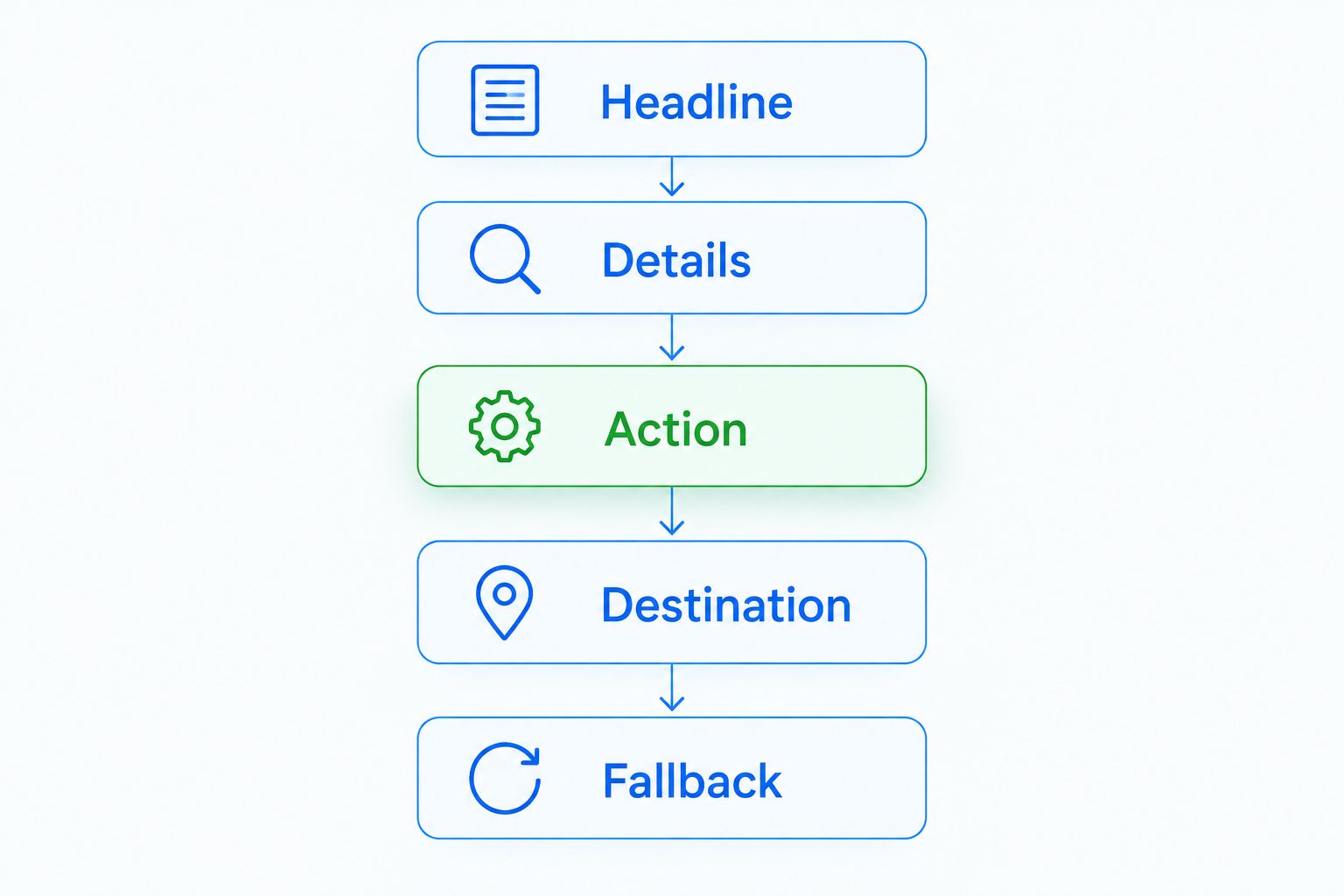
- Headline: state the main offer or purpose.
- Details: include only what supports the decision.
- Action: tell guests what to do next.
- Destination: open the exact page promised by the card.
- Fallback: keep essential instructions readable in print.
Proof the folded card in service conditions
Print a full-size proof before approving the production file. A flat PDF cannot show whether an illustration crosses a fold, whether the reverse face is upside down or whether the assembled card blocks a sightline.
Ask someone who did not write the card to read it from a normal seat. Have that person explain the action without coaching. This is a practical clarity check, not a substitute for tracking real guest behaviour.
Check the content and construction separately. First verify names, dates, spelling, destination pages and approved descriptions. Then inspect panel orientation, fold placement, contrast and stability. Mixing these checks into a quick glance makes small errors harder to isolate.
Keep a dated approval file for the 2026 version. When a detail changes, revise the source artwork and the approval record together. Do not let an old attachment become the accidental master file during a rushed reorder.
- Fold the proof in its intended orientation.
- Read every panel from a seated position.
- Scan the printed QR code, not just the screen version.
- Check dates and descriptions against approved source information.
- Record the final filename and approval date.
Run a short test and set replacement rules
Start with a limited deployment rather than distributing untested cards across the whole taproom. Use a 7-day test period as a planning window if it covers your normal service pattern; extend the test when it misses the event or shift you need to assess.
Track a result that matches the card's job. An event card needs booking information; a menu card needs evidence that guests reach the intended menu. QR scans show visits to a destination, not confirmed purchases or proof that the card caused a sale.
Combine the tracking with staff observations. Ask whether guests understand the message, whether cards get moved aside and whether servers repeatedly correct the same misunderstanding. Record those observations consistently rather than relying on memory after a busy shift.
Create a replacement rule before the next reorder. A card with outdated event information needs removal even when the paper looks new. A physically damaged card needs replacement even when its message remains current.
- Log the tables and dates included in the test.
- Track the action named in the original brief.
- Record repeated guest questions and placement problems.
- Remove cards with obsolete information immediately.
- Check remaining cards during the opening routine.
Compare table tent options for your taproom
Choose by message lifespan and service conditions, not appearance alone. These are format choices to discuss with a printer, not a statement that every supplier produces every construction.
For 2026 planning, compare the complete workflow: preparation, assembly, cleaning, updates and replacement. A format that is easy to print can still create work for the service team.
| Option | Best for | Main benefit | Key limitation |
|---|---|---|---|
| Folded printed card | Short campaigns and dated events | Displays a complete message without a separate holder | The whole card needs replacing when printed details change |
| Printed insert in a reusable holder | Frequently revised taproom messages | Lets your team change the insert while retaining the holder | Holders need storage, cleaning and space on the table |
| QR-led table tent | Rotating tap lists and changing information | Keeps detailed content on an editable destination | Guests need a working device and access to the destination |
| Finished folded card | Longer-running indoor messages | Allows finishing to be specified around handling needs | Finish suitability must be checked; protection is not automatic |
| In-house paper prototype | Testing wording and footprint | Lets your team revise a sample before ordering production | A prototype does not establish production colour or durability |
An in-house prototype is best for deciding what to print, not for assuming how a commercial stock will behave. A reusable holder is best when updates justify maintaining the holder. A folded card is best when you want a self-contained display with no separate fixture.
When discussing table tent printing with Print Fast, send the use case and required format rather than a screenshot alone. Confirm the specification in writing before treating any option as the selected production method.
Common mistakes breweries make with table tent cards
Printing the entire rotating tap list
A detailed printed list creates a maintenance task every time a listed item changes. Use the card for stable instructions or a focused feature, and put frequently revised details on a maintained menu. Assign responsibility for checking that destination during service preparation.
Hiding the purpose behind a QR code
An unexplained code gives guests no reason to scan. State whether it opens the tap list, event details or another specific destination. Keep the main instruction visible so the card still makes sense when a guest leaves their phone in a pocket.
Treating condensation resistance as a design choice
An image of a shiny card does not demonstrate how the finished item handles moisture. Ask about the actual material and finish, then evaluate a sample in your environment. Keep claims about cleaning and outdoor use tied to the confirmed specification.
Giving every department equal space
A tasting feature, event notice and merchandise message compete when they share a small panel. Pick the action that matters for that placement. Use a separate campaign or another surface for secondary information instead of shrinking everything until nothing reads comfortably.
Measuring scans as sales
A scan confirms an interaction with the linked destination, not a purchase. Keep scan reporting separate from bookings or transactions you can actually identify. For a 2026 review, compare the recorded outcome with the original purpose before deciding whether to repeat the card.
FAQ
What’s the best table tent card for a brewery taproom?
The best format matches how often your message changes and how the table is used. Choose a folded card for a self-contained campaign, a reusable holder for changing inserts or a QR-led card for an editable tap list.
What should I put on a brewery table tent?
Put a clear headline, essential details and one primary action on each face. A tasting flight explanation, event announcement or menu instruction works better as a focused message than as part of a crowded noticeboard.
Should brewery table tent cards have a QR code?
Use a QR code when it opens useful information that changes or needs more space. Label the destination clearly and keep essential instructions readable without scanning.
Are laminated table tent cards waterproof?
Do not assume a laminated table tent is waterproof. Ask the printer to confirm the finished construction’s suitability for moisture, exposed edges and your intended cleaning method.
Can I get rush printing for taproom promotional materials?
Print Fast offers rush printing for Toronto businesses. Confirm the format, finishing, artwork approval and handoff deadline for your particular table tent project before relying on a production schedule.
How many table tent cards should I order for my brewery?
Base the quantity on the tables and service areas that need the message, then account for your replacement plan. Test the footprint and placement first rather than ordering from the seating capacity alone.
Can I use brewery table tents outdoors on a patio?
Use a patio table tent only after checking its material and stability for that location. Do not assume an indoor folded card is appropriate for wind, rain or routine outdoor exposure.
One last thing
Write the removal rule before you approve the print file. Put the campaign end date and responsible staff member in your internal job record, even when that information does not belong on the guest-facing artwork. This makes the card part of a managed campaign rather than permanent table clutter.
Related guides
- Custom coaster printing for brewery taprooms
- Custom labels for craft brewery cans
- Laminated menus for restaurants and cafes
Request a custom quote from Print Fast for your brewery table tent cards. Include the finished format, quantity, intended use, artwork status and required handoff date.

